If someone had told me five years ago that teachers around the world would one day be seriously debating whether a robot belongs in a classroom, I probably would have smiled.
I would have told them they’d been watching too many science-fiction movies.
Because, let’s be honest, that’s how most of us grew up. Robots belonged to the future – a future so distant that we never felt the need to take it seriously.
And yet… today we’re not talking about fiction.
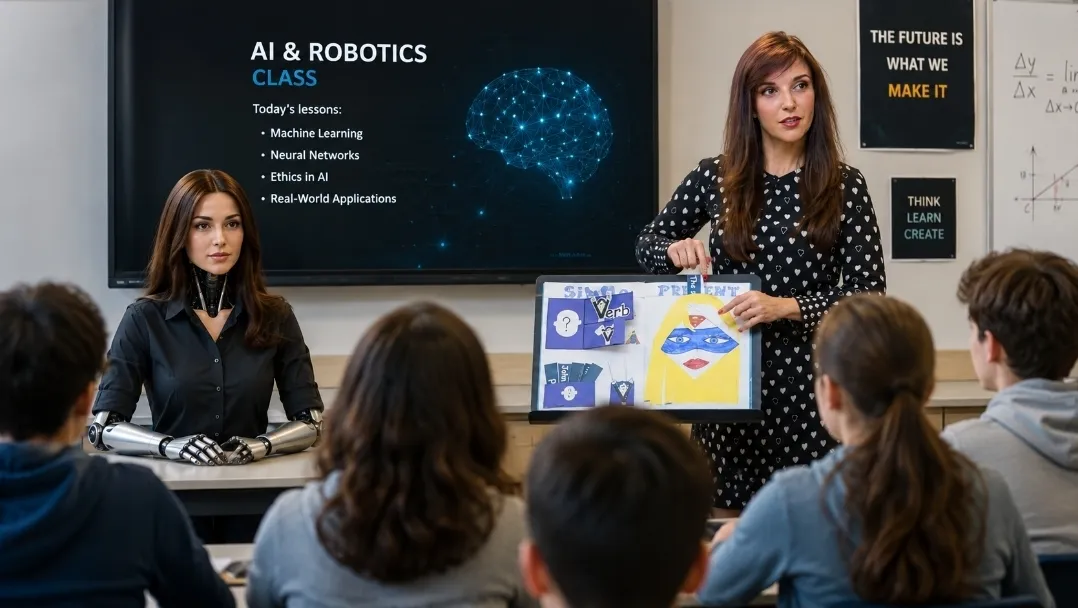
We’re talking about a real school. Real students. Real teachers. And a humanoid robot that already has a name.
Sally.
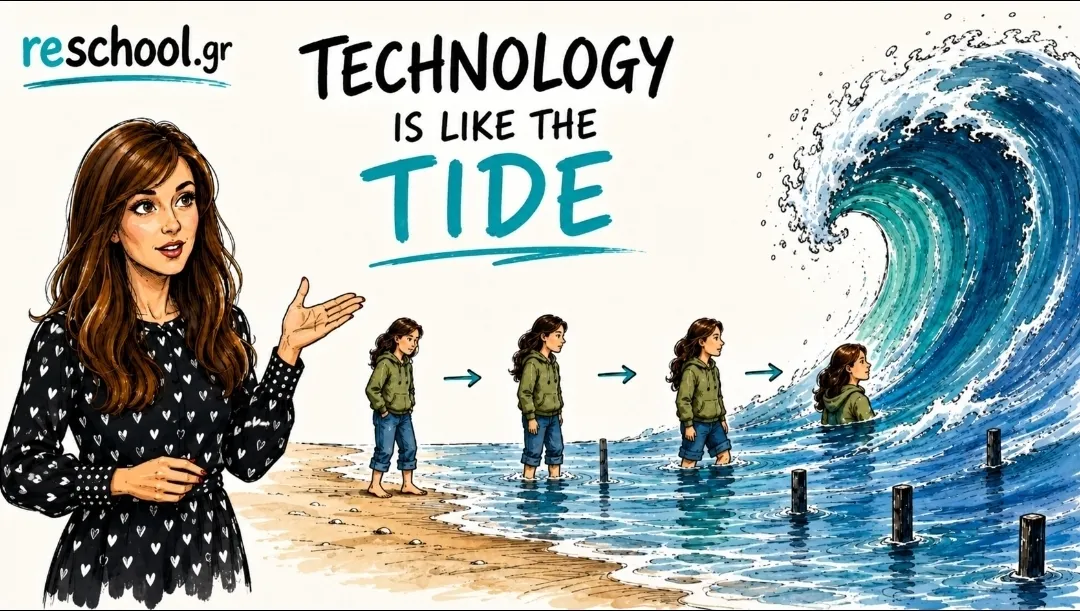
You know, technology reminds me a little of the tide.
It never arrives as one giant wave you can see coming from miles away. It creeps in quietly. At first, it only touches your toes. You shrug and think, “It’s nothing.” Then the water reaches your ankles. “Still nothing.” Before you realize exactly when it happened, you look around—and you’re already standing in the sea.
That’s exactly how artificial intelligence feels to me.
Two years ago we were asking it to write emails.
Today we’re discussing whether it should sit across from our children in a classroom.
When I first came across the story, I did what I always do whenever something sparks my curiosity.
I didn’t stop at the headline.
I started digging.
I read interviews. I searched for photos. I looked for videos filmed by students. I researched the company that built Sally, the school that invited her, the public reaction, and the scientific studies on humanoid robots in education.
And something unexpected happened.
The more I learned about Sally, the less interested I became in the robot itself.
Instead, I found myself thinking about people.
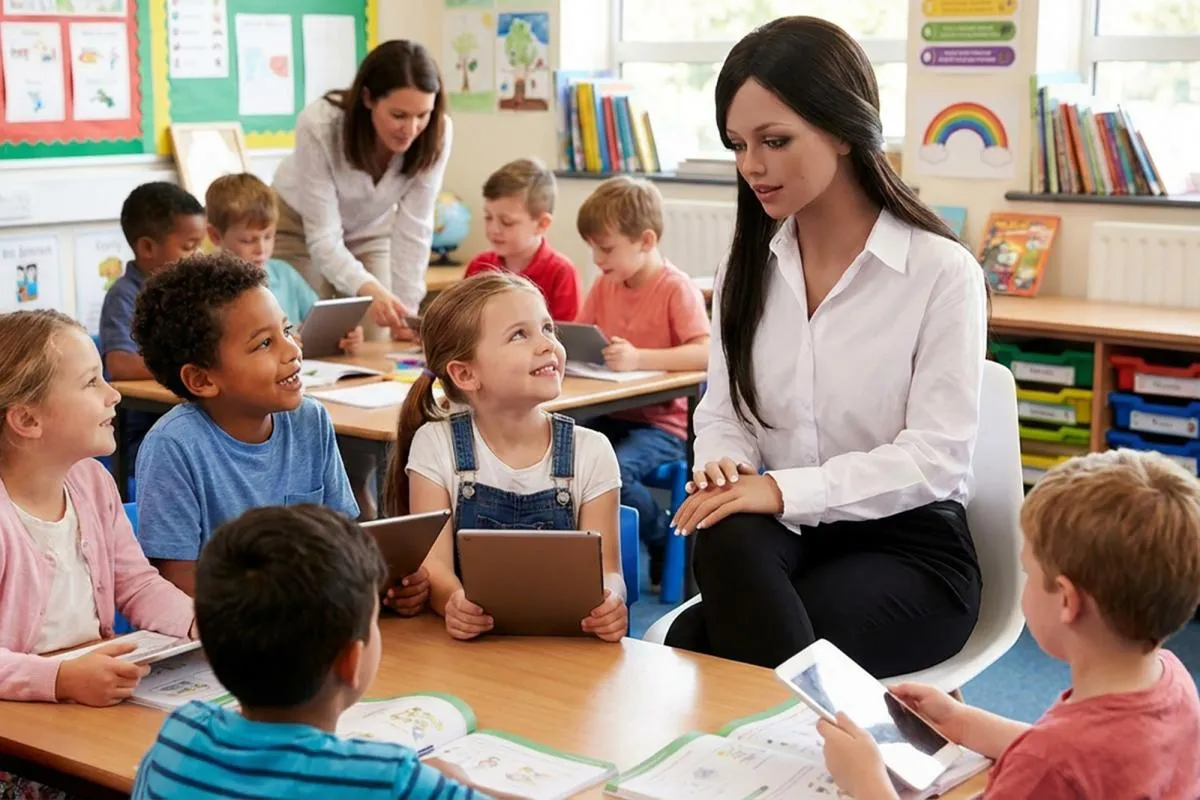
Because Sally isn’t just another chatbot.
She isn’t simply a program running on a computer.
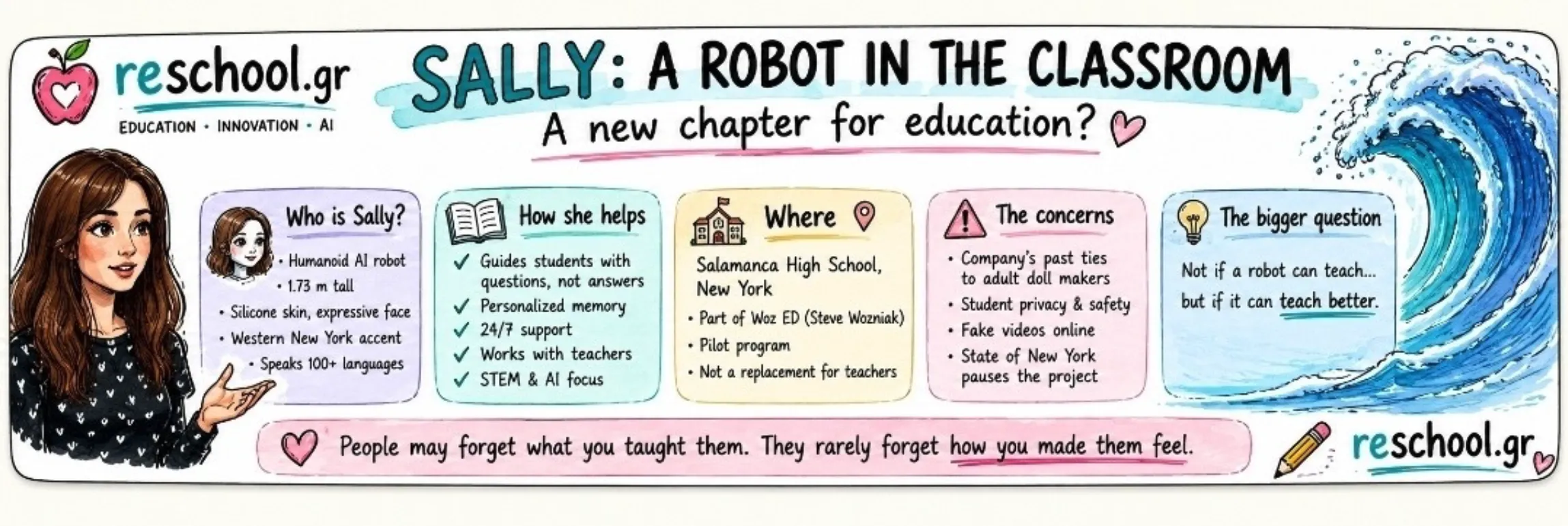
She stands about 1.73 meters (5’8″) tall, has silicone skin, long brown hair, expressive facial movements, eyes that follow the person she’s is speaking to, and remarkably full lips -described by American journalists as “bee-stung lips” because they resemble Angelina Jolie’s distinctive features.
She doesn’t walk, though.
She remains seated for safety, stability, and reliability.
And according to people who have met her, something strange happens surprisingly quickly:
You forget you’re talking to a machine.
Perhaps because our brains instinctively associate a face, a pair of eyes, and a human voice with another human being.
And that’s precisely where the difficult questions begin.
Sally even speaks with a Western New York (Buffalo) accent, because the school specifically requested it, hoping she would sound more familiar and approachable to local students.
One design decision fascinated me even more.
She isn’t supposed to hand students the answers.
Instead, she has been programmed to respond with questions, hints, and prompts that encourage students to think for themselves rather than simply solving the problem for them.
That wasn’t an accident.
It was a deliberate requirement from the school.
The principal explained that one of today’s biggest concerns about AI is that it encourages students to take shortcuts instead of developing genuine understanding. That’s why many of the typical AI features were intentionally removed.
The broader vision was even more compelling:
A student whose family cannot afford private tutoring would still have access to personalized academic support – 24 hours a day.
Sally was scheduled to begin working at Salamanca High School in New York.
Not as a replacement for teachers – at least that’s what the school repeatedly emphasized – but as a teaching assistant.
She would support
-
STEM and AI classes,
-
answer students’ questions,
-
work alongside classroom teachers,
-
and continue helping students long after the school day had ended.
If a student got stuck with homework at 10 p.m., Sally could continue exactly where that student had left off earlier in class.
Then I came across something that genuinely made me stop.
Sally doesn’t simply remember the lesson.
She remembers you.
Each student has a personal account, allowing the system to remember where they struggled, which activities they completed, and exactly where they stopped during their previous session.
The next day she can simply say:
“Yesterday we stopped here. Would you like to continue?”
This isn’t a presentation delivered to an entire classroom.
It’s personalized memory.
And I have to admit…
That’s impressive.
There are also several things that almost nobody mentioned.
Sally speaks more than 100 languages and can translate conversations in real time.
She can even help the teacher if they lose track of the lesson because she knows the planned curriculum.
If a student mentions thoughts of self-harm or describes a serious bullying incident, the system is designed to alert the school so that a human can intervene.
And one more important detail:
She doesn’t freely browse the internet.
She operates within a closed system and only knows what the school has intentionally allowed her to know.
Ask her something outside that knowledge base, and she doesn’t invent an answer.
She doesn’t try to sound clever.
She simply says,
“I don’t know”
and directs the student to appropriate educational resources.
All these details suggest that beneath the impressive appearance lies a great deal of thoughtful design.
Or at least…
that’s the first impression.
Sally normally costs around $95,000, although the school acquired her through a pilot program for $57,590.
Even so, the company itself acknowledges something refreshingly honest:
There is still no scientific evidence showing that a humanoid robot helps children learn better than a standard computer screen.
In other words, this isn’t the implementation of a proven educational method.
It’s a large-scale educational experiment.
And perhaps the real question isn’t whether a robot can teach.
It’s whether it can teach better.
Then I became curious about the company behind Sally.
It’s called Realbotix, a Canadian company that has spent years developing AI-powered humanoid robots.
So far, nothing unusual.
But the deeper I looked, the more I understood why Sally’s announcement triggered such intense debate.
Realbotix has historical ties to companies that became known for manufacturing highly realistic adult dolls. That connection immediately raised concerns among many teachers and parents, who questioned whether a company with that background was the right choice to introduce such groundbreaking technology into a public school.
Realbotix, however, strongly rejects that comparison.
The company insists that Sally was designed entirely by its own educational team, specifically for classroom use, that she shares no design heritage with its adult-oriented products, and that the two divisions operate independently, with separate staff, facilities, and product development.
There was another detail that very few articles mentioned.
Salamanca High School wasn’t chosen by chance.
The school already participates in Woz ED, the educational initiative founded by Apple co-founder Steve Wozniak, which aims to bring robotics, coding, engineering, and artificial intelligence into classrooms.
In other words, Sally wasn’t introduced into a school that had only just discovered AI.
She arrived at a school that had already embraced emerging technologies.
Even so, the conversation had already begun.
And when parents’ trust is at stake, sometimes it’s not enough to be right.
You also have to convince people that you’ve earned that trust.
That’s when the story took an unexpected turn.
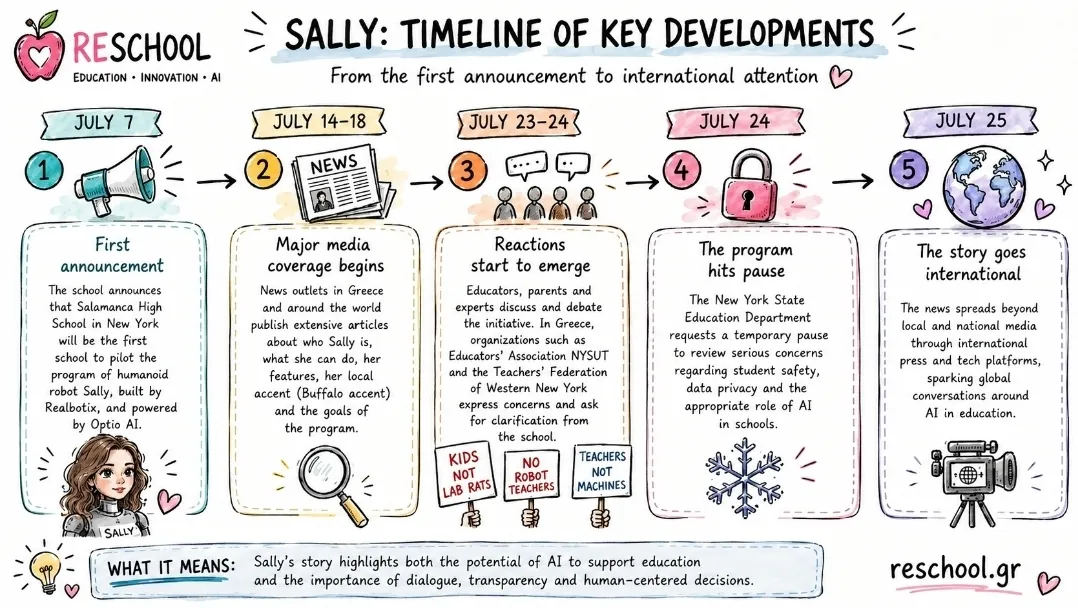
The State of New York asked the district to temporarily pause the project.
The concerns focused on student privacy, data protection, safety, and the appropriate role of artificial intelligence in schools.
Almost overnight, social media filled with photographs and videos that supposedly showed Sally interacting with students in classrooms.
I spent hours trying to find authentic footage recorded by students.
I couldn’t find a single verified example.
What I found instead were countless AI-generated images and repeated reports that fake videos had already begun circulating online.
There’s something strangely ironic about that.
The first major story about a robot entering a school was accompanied by images that weren’t even real.
One final detail made me stop and think.
Salamanca High School isn’t just any public school.
Roughly one-third to nearly 40% of its students belong to the Seneca Nation, an Indigenous American community.
For many local residents, this wasn’t simply another educational pilot project.
It was an experiment taking place in a community that still carries historical scars from earlier educational policies imposed on Indigenous children.
Sometimes a news story carries far more history than can fit into a headline.
You might wonder why Salamanca was chosen in the first place.
The answer is actually quite straightforward.
The school had already invested heavily in AI and STEM education and wanted to become a pilot site for emerging educational technologies.
That certainly helps explain the decision.
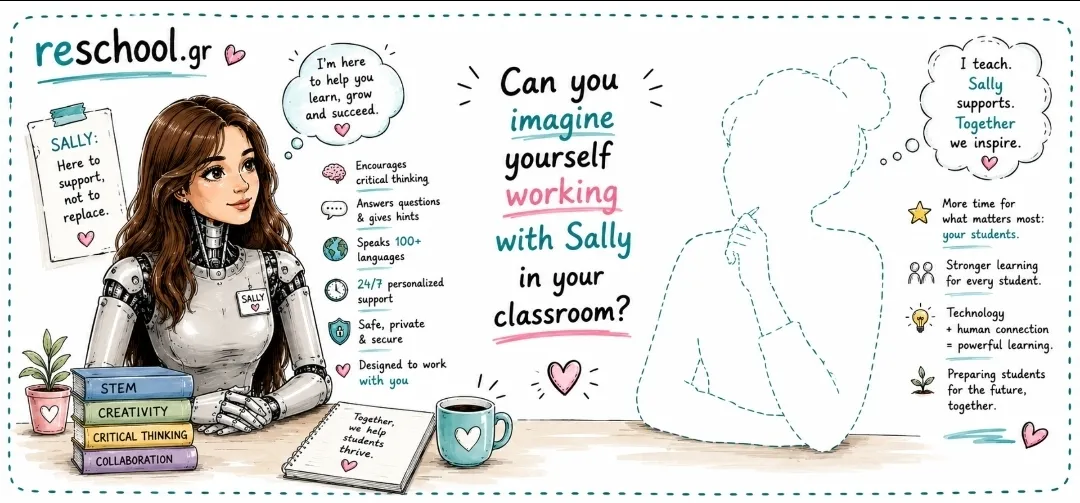
But somewhere along the way, I began wondering whether we’re all asking the wrong question.
We keep asking whether Sally could replace a teacher.
-
But what if that was never the point?
-
Because if a machine can eventually take over everything that’s repetitive… what remains for the human being?
-
And what if what remains is actually the most valuable part of teaching?