Four lines. A thousand stories. Not a single line to memorise.
How many times have we asked our students to read a dialogue?
One student reads Part A, another reads Part B. They finish, swap roles, and move on to the next exercise.
But what if, this time, we didn’t change the words at all?
What if we changed everything hiding behind them?
Because the very same sentence can express joy, anger, fear, sarcasm, or relief.
And children can discover all of this simply by playing.
The Script
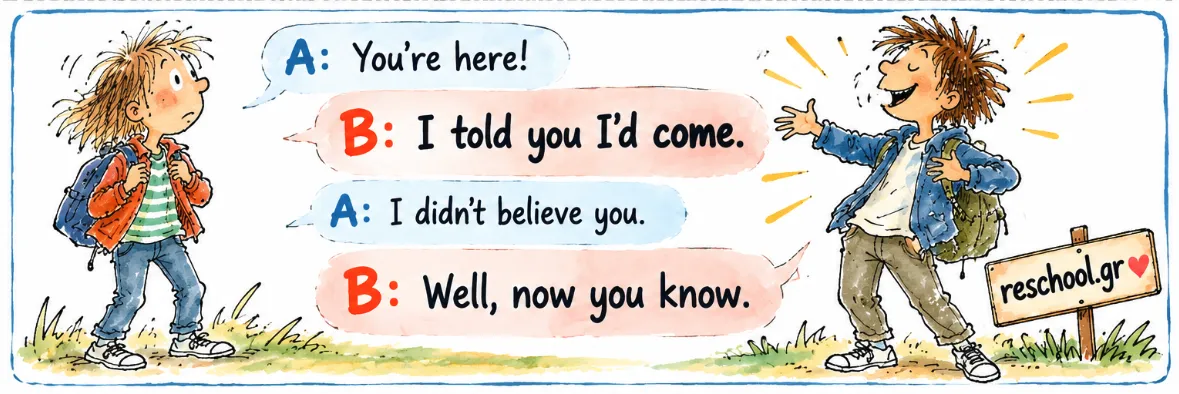
Just 4 lines!
There’s nothing to memorise. Students keep the script in front of them.
Four Different Stories
1. Two friends meet again.
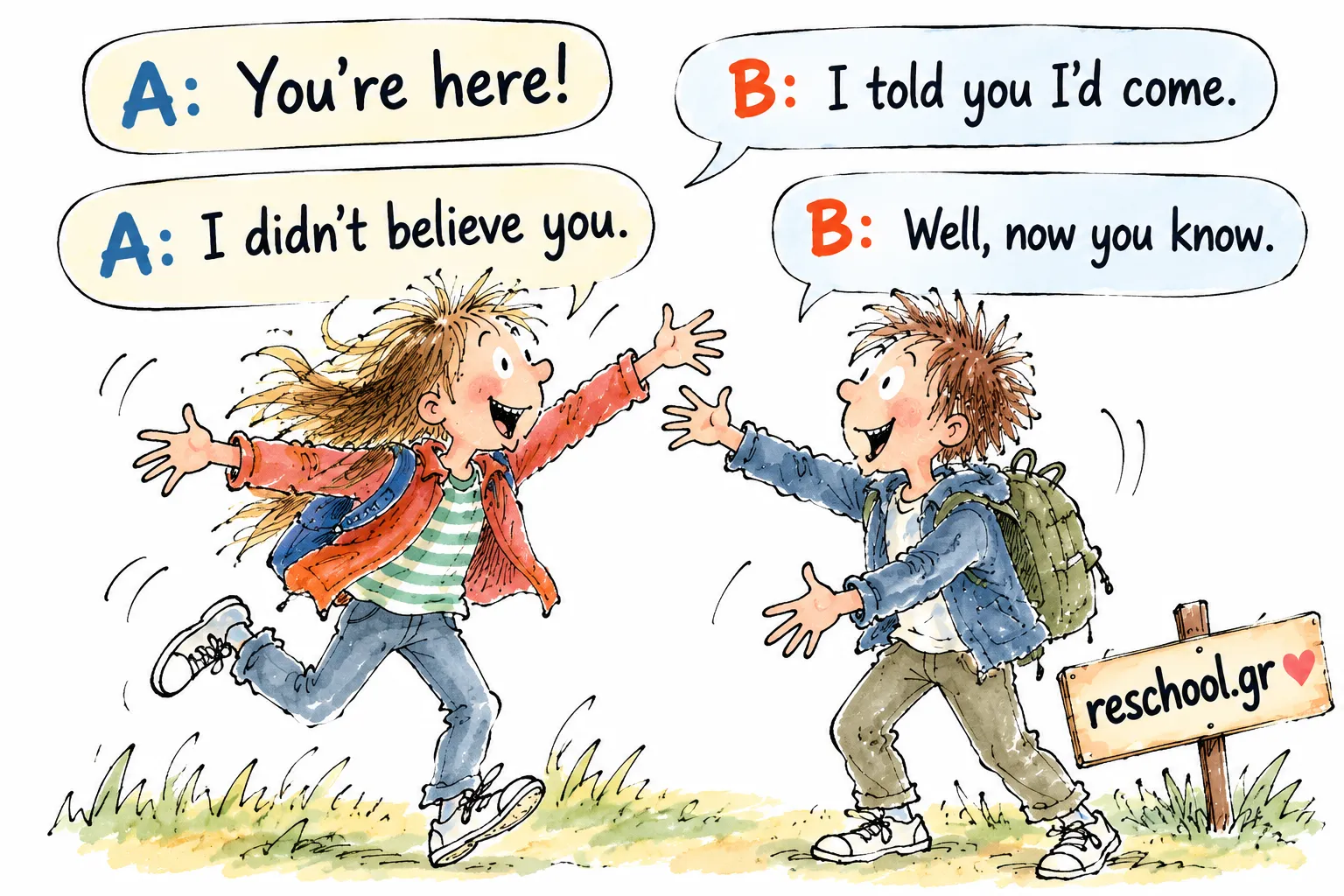
They haven’t seen each other for a long time. One of them never really believed the other would turn up. Their voices are full of excitement.
2. A detective meets a suspect.
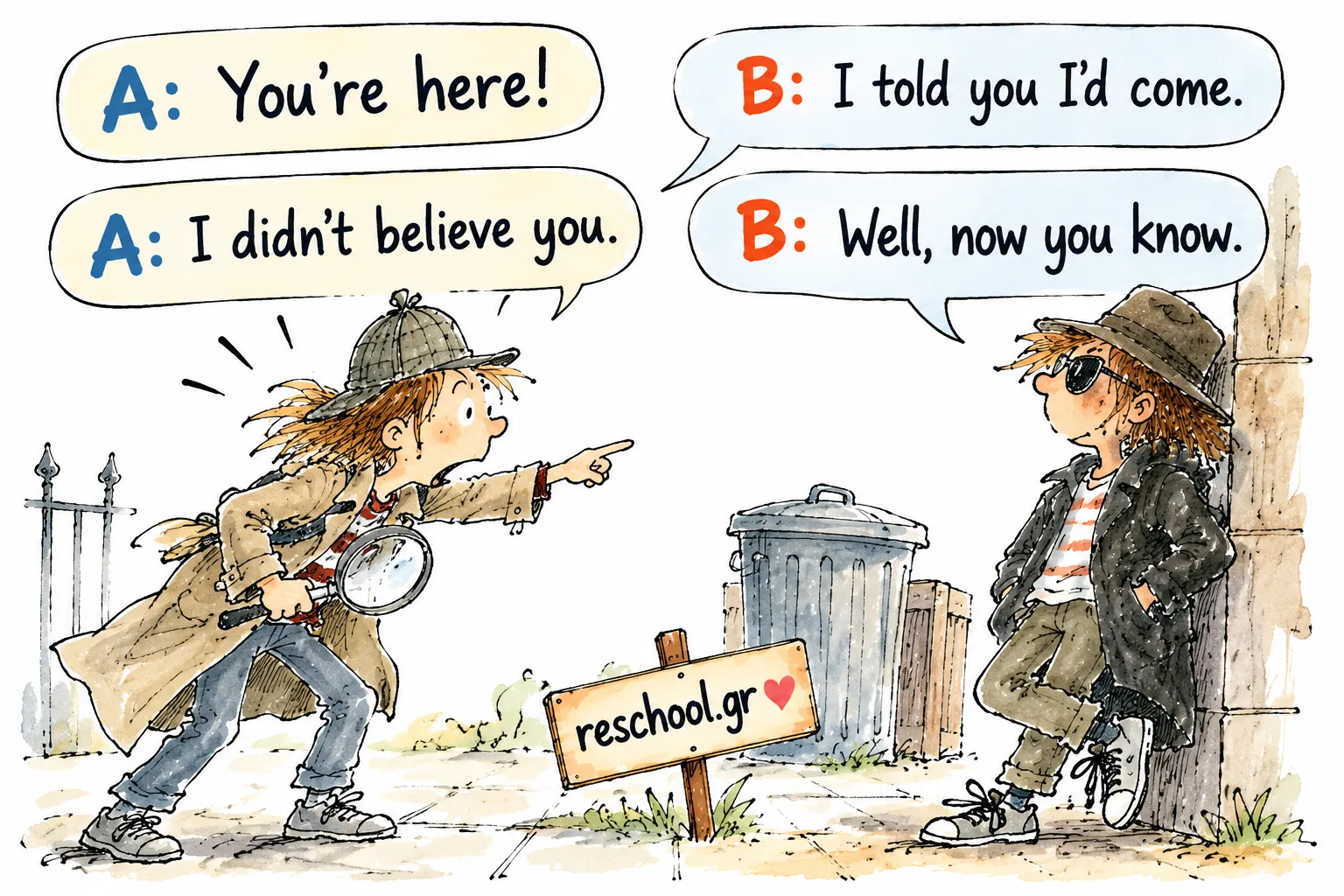
The atmosphere is tense. One is suspicious. The other speaks confidently, perhaps even threateningly.
3. Two friends meet after a serious misunderstanding.
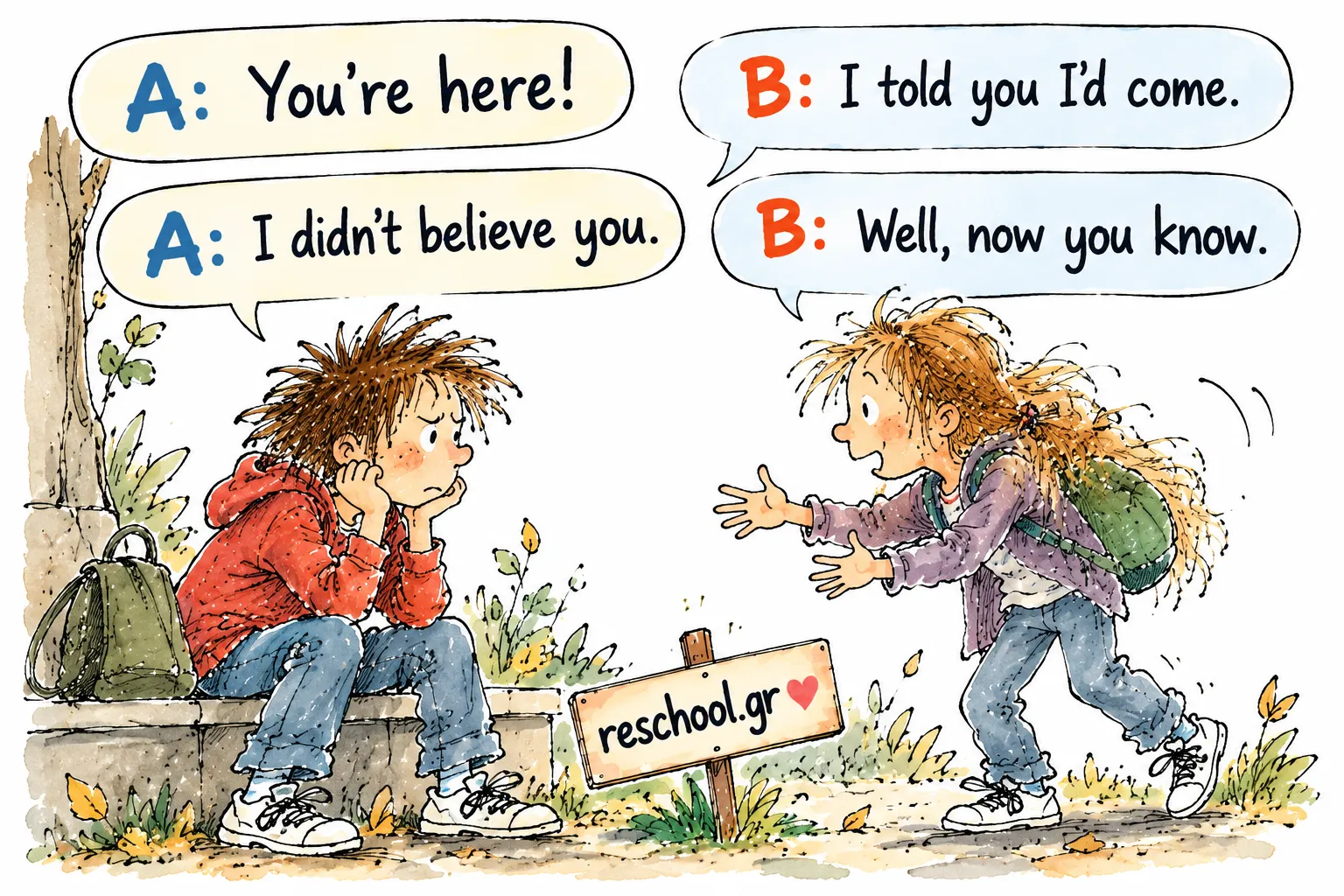
One is hurt. The other is trying to rebuild trust. The pauses between their words may reveal more than the words themselves.
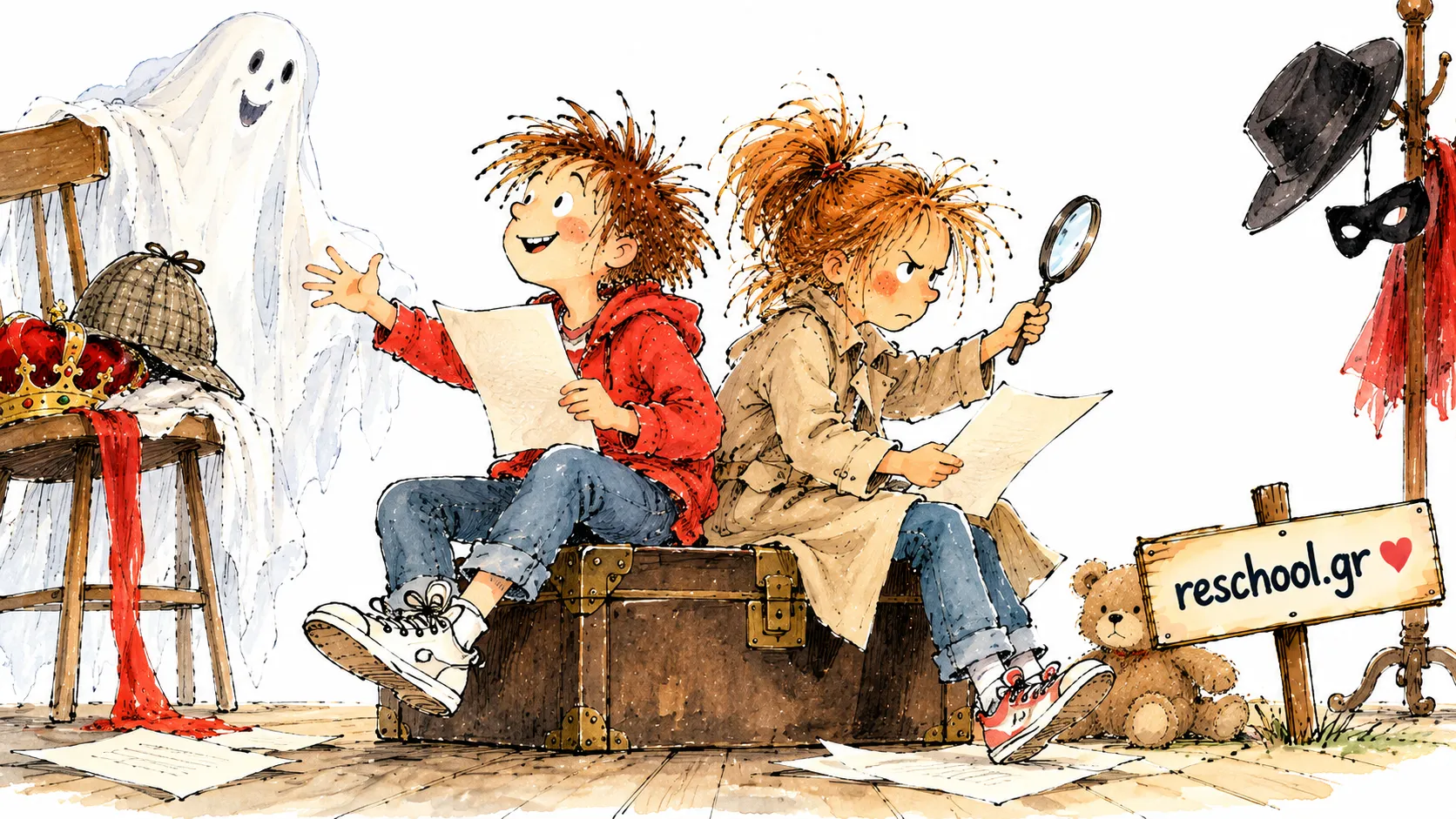
4. A child meets a ghost.
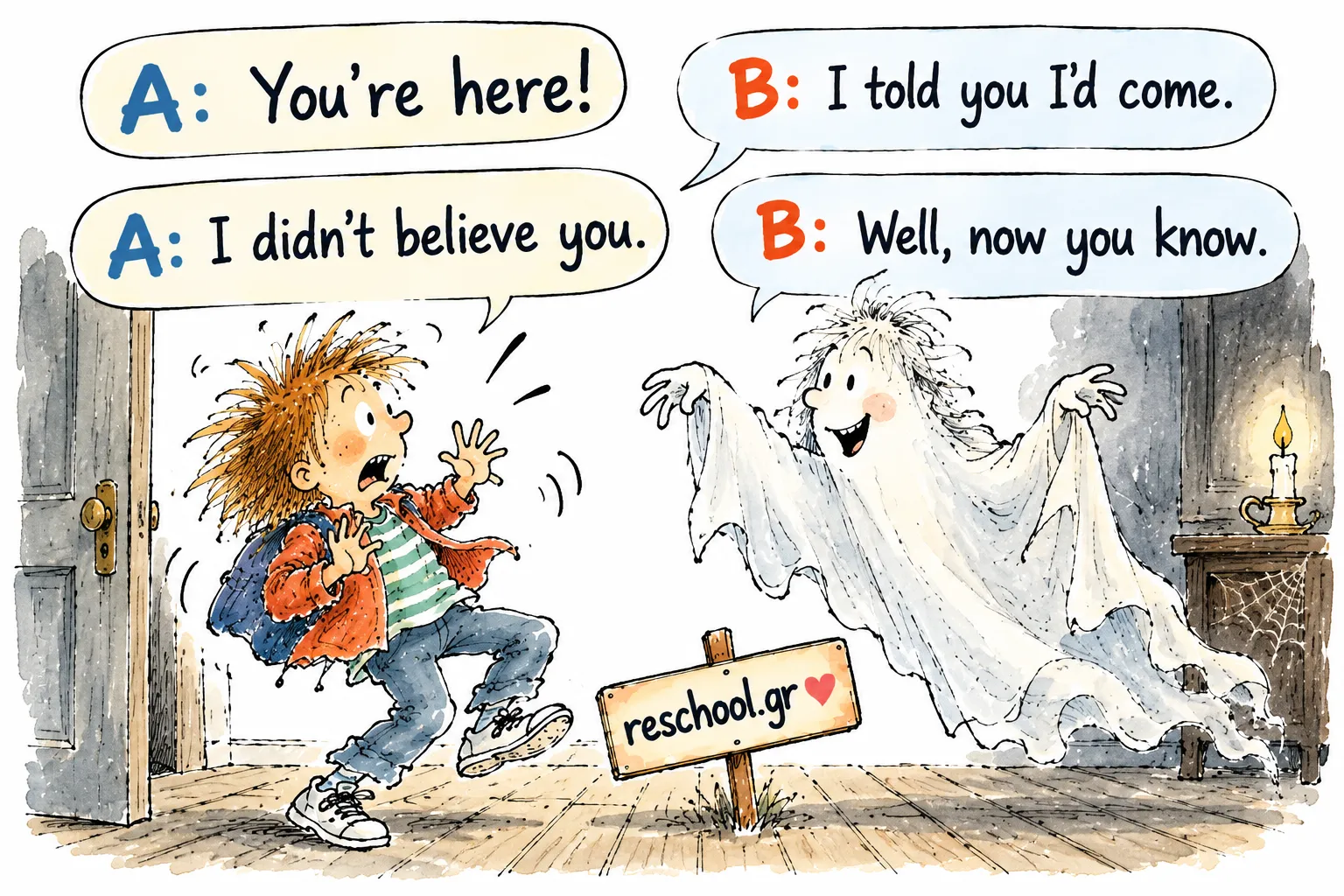
The child is terrified. The ghost, on the other hand, seems to be having the time of its life! In all four situations, the students read exactly the same dialogue.
How It Works in the Classroom
-
Give the script to two students.
-
The two actors secretly choose a situation card.
-
They read the dialogue, using their voices, facial expressions, pauses, eye contact, and body language to bring the scene to life.
The rest of the class watches and tries to work out what’s happening.
-
Who are the characters?
-
How do they feel?
-
What happened before this conversation?
-
What makes you think so?
But guessing isn’t enough.
Students must explain which clues helped them reach their conclusions.
The Twist: Two People. Two Different Stories!
In the final round, each actor receives a different secret instruction.
-
Student A believes they’re meeting a dear friend.
-
Student B believes they’re facing someone who has betrayed them.
Neither knows what the other has been told.
They read the same dialogue.
-
What does the audience notice?
-
Why do the two characters seem to misunderstand each other?
And this is where the most interesting conversation begins.
What Are the Children Actually Learning?
-
Reading fluency: They read the same text repeatedly, but each time with a different communicative purpose.
-
Intonation: They discover how changes in pitch, stress, rhythm, and tone can transform meaning.
-
Speaking: They discuss, justify their opinions, and make predictions in English.
-
Inference: They look for clues to understand what isn’t explicitly stated.
-
Pragmatics: They discover that meaning depends on context, relationships, and the speaker’s intentions.
-
Social-emotional learning: They explore different perspectives and begin to understand how two people can experience the very same conversation in completely different ways.
And here’s something worth remembering.
They don’t need to be good actors.
We’re not assessing their acting abilities.
We’re giving them a safe, creative opportunity to experiment with language.
One Final Challenge
-
Ask students to read the dialogue again.
-
This time, they mustn’t change a single word or use any gestures. Only their voices.
-
Can the rest of the class still work out the story?
Now reverse the challenge.
-
Ask the students to act out the scene without speaking at all. Not a single word.
-
How much meaning remains when we take the words away?
And One More Thing for Teachers…
The dialogue doesn’t have to be the one we’ve used here.
We can write a short script containing whatever vocabulary or grammar structure we want to teach or practise.
Present Perfect, Conditionals, Phrasal Verbs, Idioms… whatever we’re working on at the time!
Students practise the same language structures repeatedly, but each time:
-
in a different communicative situation,
-
with a different emotion,
-
and with a different intention.
Suddenly, repetition no longer feels like repetition.
Every reading becomes a new experience.
And the best part?
We don’t need to prepare four different dialogues.
One script is enough to create four completely different stories!
One Last Thought
In the classroom, we often insist that children learn the right words.
And rightly so.
But in real life, knowing what to say isn’t enough.
We also need to understand how we say it, why we say it, and how the other person might hear it.
Because sometimes two people use exactly the same words.
And yet, they’re having two completely different conversations.