I want my classroom to resemble real LIFE as much as possible and feel less like a waiting line, where one person speaks, everyone else waits, and time crawls by until the next turn arrives.
Whenever I see ten -or even more, it doesn’t really matter- students sitting still, waiting to say a single word while everyone else does absolutely nothing, my mind immediately drifts beyond the classroom door and into the real WORLD, where things work in a completely different way.
Take a restaurant, for example. No one waits for one person to finish before the next person is allowed to begin. At the very same moment, someone is cutting their food, someone is laughing at a story, someone is filling the glasses around the table, someone is gazing absent-mindedly out of the window, someone stands up to greet a friend who has just arrived, and someone else is ordering dessert. Everyone is doing something different, everyone is in the same place, and yet everyone is participating in the same EXPERIENCE.
That is how I imagine a CLASSROOM. Not as a military parade where every step must be identical, but as a jazz orchestra where many different sounds coexist, interact, leave space for one another, and ultimately create something far more alive than a single melody repeated over and over again.
Sometimes I say to my students:
— When I count to three, I want all of you to tell me your name at the same time.
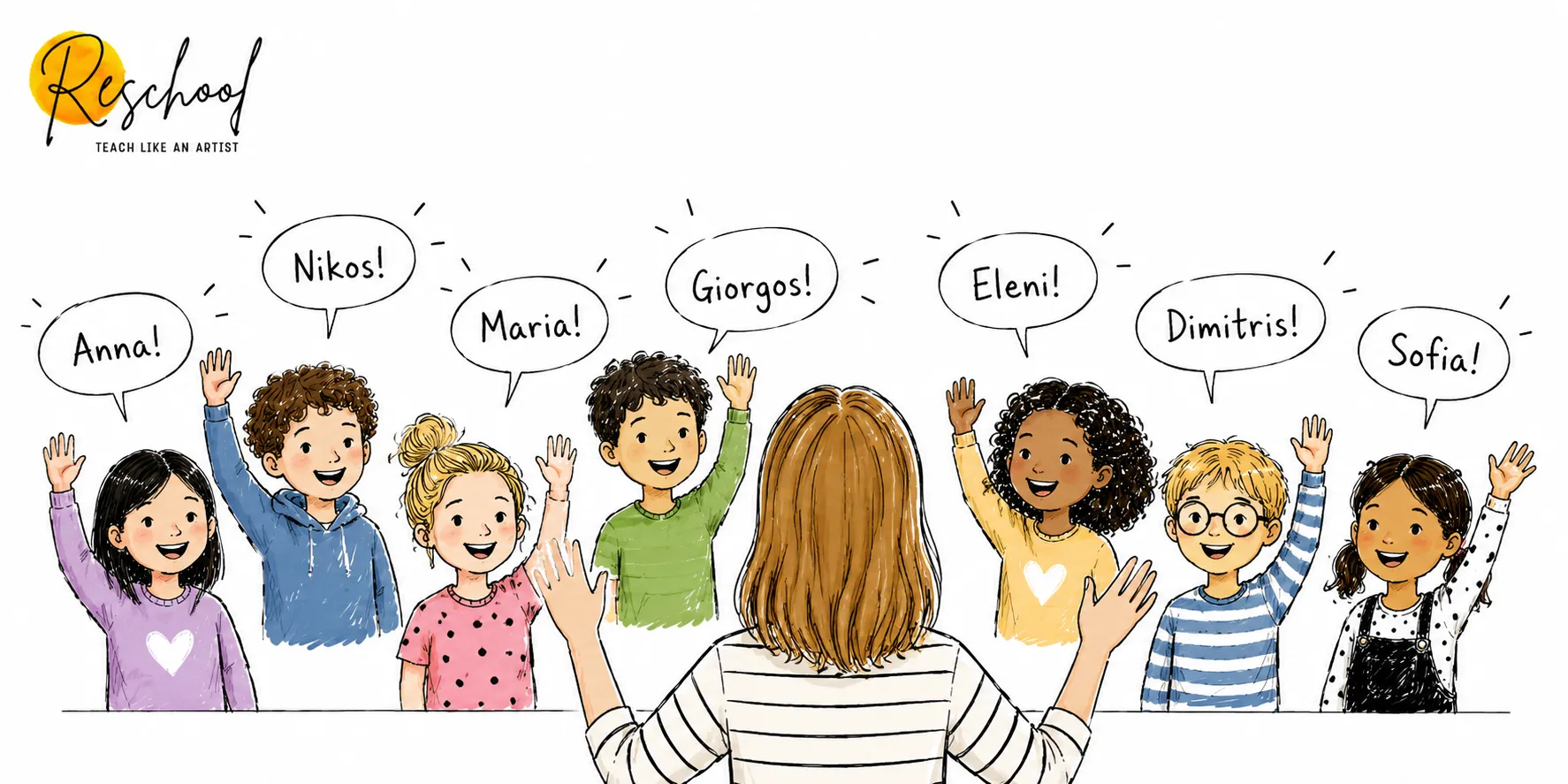
And they do.
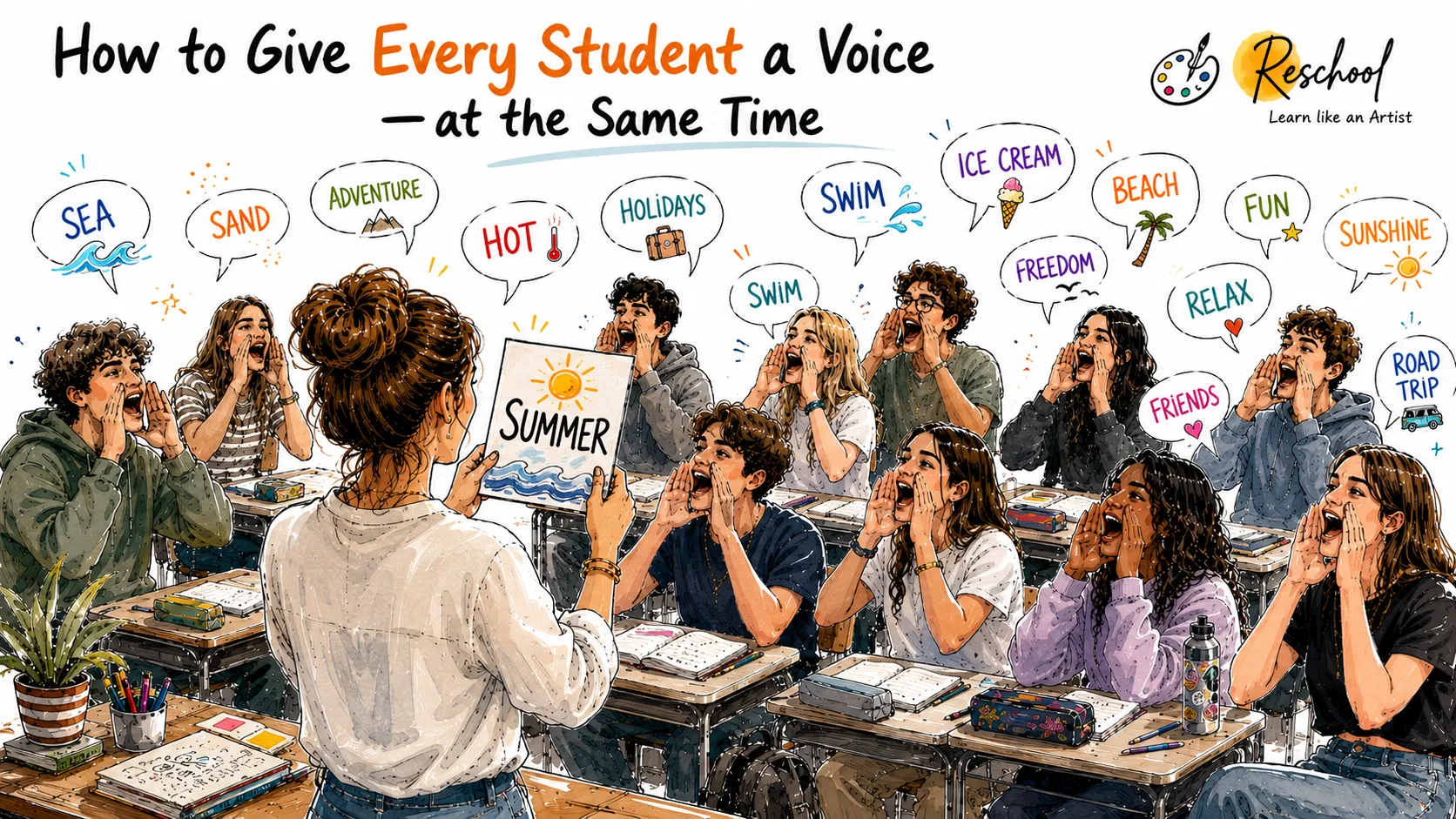
Sometimes I hold up a card that says SUMMER and ask them to shout out the first word that comes to mind.
“Sea!”
“Beach!”
“Sand!”
“Hot!”
“Swim!”
“Holiday!”
“Ice cream!”
Within seconds, the room is filled with dozens of ideas, memories, associations, and connections. Not one voice. Many VOICES.
To someone passing by the classroom door, it may sound like noise. To me, it sounds like PARTICIPATION. It is the sound of students thinking instead of waiting. It is the sound of students connecting instead of watching. It is the sound of a classroom that feels a little more like LIFE itself.
For a few seconds, the classroom fills with a small burst of creative chaos – and that is exactly what I love about it. Sometimes I keep going and ask whatever comes to mind. It can be something broad or something very specific. The point is not the question itself. The point is that I receive simultaneous answers. I can walk among my students and listen to individual responses, or I can step back and hear their words blending together into a collective hum. It all depends on what I am trying to achieve in that moment.
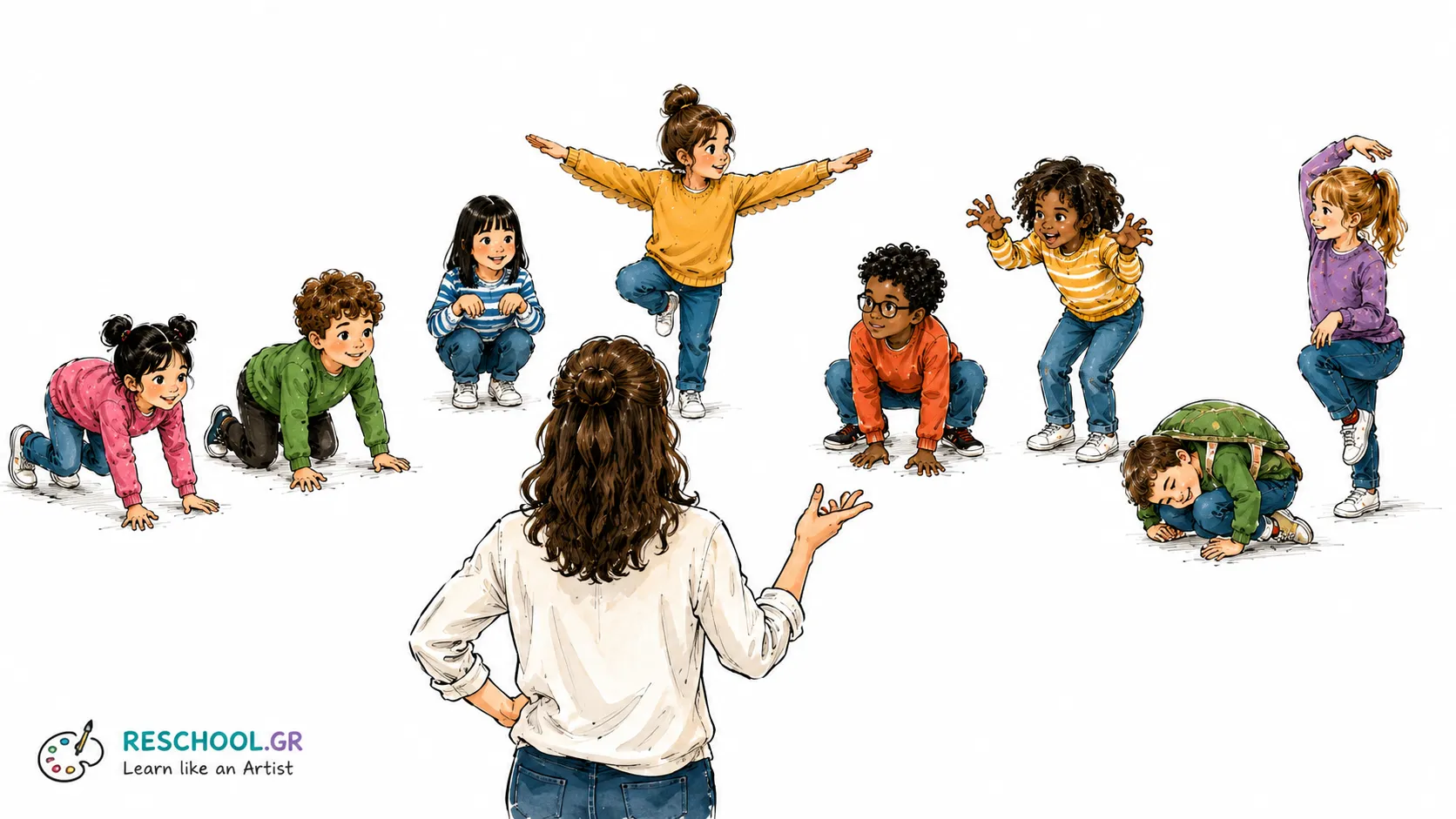
If I want to warm them up, I might ask where they live, what their favourite food is, or what colour they like best. Or I might ask, “If you were an animal, what animal would you be?” After they answer together, I might continue, “Show me how that animal moves.” Suddenly the room comes alive. Students begin imitating animals, their movements, their sounds, even their habits. And if there isn’t enough space for that kind of luxury? Then I simply ask them to freeze like statues in a pose that captures the animal they have chosen.
Now imagine we are working with a TEXT. Perhaps I want something a little less structured. Something that wakes everyone up. So I might say,
-
“When I count to three, tell me the name of an animal that appeared in the text.”
-
“Tell me one word from the text that you think is the most important.”
-
“Choose a character from the story. When I count to three, tell me how that character feels.”
And if we are doing a little GRAMMAR, I might ask them to tell me
-
an animal bigger than a dog,
-
one thing they will do if it rains,
-
one country they have visited,
-
or something they do every day.
But please do not get stuck on the examples. The questions themselves are not the point. They are simply a window into a way of teaching that can take a thousand different forms.
It does not matter whether we ask about animals, food, hobbies, jobs, emotions, or dreams. What matters is that every student is invited to bring something personal into the classroom – a thought, a preference, a memory, a feeling, a wish, an idea that is not identical to anyone else’s. Every answer carries a small piece of the person who gave it, and that is where the real value lies.
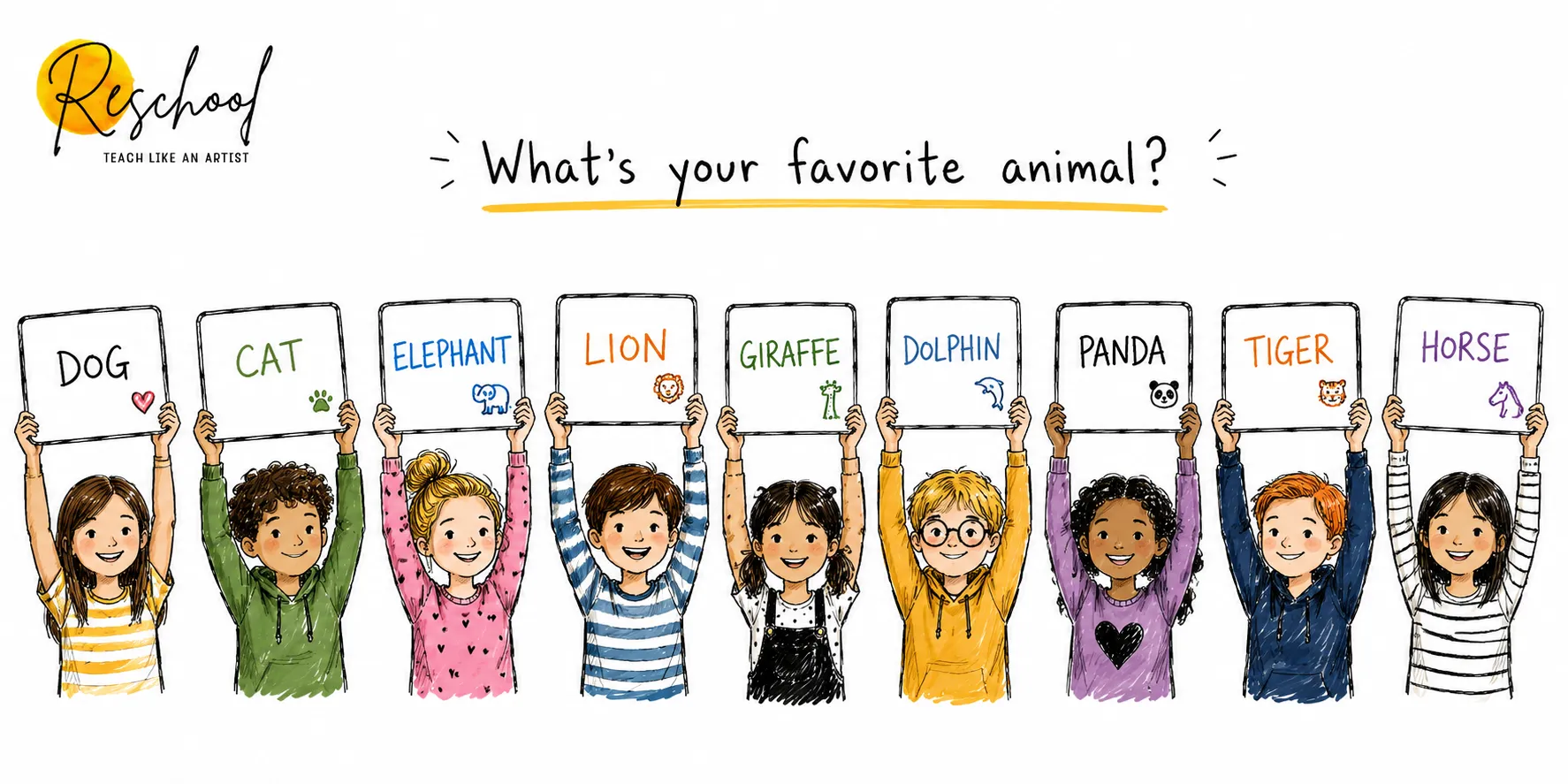
Of course, there are times when I do not want to hear only the pulse of the group. Sometimes I want to see each student’s thinking more clearly. That is when the exact same idea simply changes shape. Instead of voices, whiteboards appear. I ask the same question, give students a few moments to think, and when I count to three, ten different answers rise into the air at exactly the same time. For a few seconds, I can see the entire landscape of the classroom. Not only who found a correct answer, but how each student thought, what they noticed, what they remembered, and what connections they made to their own experience. The voices allow me to hear the energy of the group. The whiteboards allow me to SEE its thinking.
I am often asked whether students sometimes need to do the same thing. Of course they do. When everyone sings the same song, reads the same text, or plays the same game, a powerful sense of belonging is created. Those moments matter, and I use them all the time. What fascinates me most, however, is the moment when everyone participates at the same time without saying or doing the same thing. The moment when ten different answers emerge. Ten different personalities. Ten different ways of seeing the world. At that point, the classroom stops being a group of children following the same instruction and becomes a small community of people learning how to coexist.
The child is not simply practising English, mathematics, science, or any other subject. Human beings develop their sense of self by comparing their thoughts, feelings, and reactions with those of other people. When a child hears ten different answers around them, they are not only learning vocabulary or reading comprehension. They are learning that they can think differently without being wrong. And that lesson often stays with them far longer than anything printed in a textbook.
Through this approach,
-
students practise having a VOICE.
-
They practise expressing preferences.
-
They hear themselves speak.
-
They discover that their thinking has a place within the group,
-
and they begin to understand that their uniqueness is not a problem to be corrected but a valuable part of the bigger picture.
Sometimes I do not want my classroom to feel like a waiting room. I want it to buzz like a large Sunday family lunch, where everyone has something to say, nobody needs permission to exist, and life is happening everywhere at once. Learning becomes deeper when the classroom resembles LIFE itself – when many different things can happen simultaneously and when the teacher is not trying to make every child move at exactly the same pace, but instead creates a space where different paths can meet, exchange ideas, and learn from one another.
After all, every time students walk out of the classroom, the world does not ask them to be the same. It asks them to collaborate, to express themselves, to listen, to think, and to live alongside people who are different from them. So what do you think? Should a great classroom feel more like a waiting room, where voices are heard one at a time, or more like a Sunday family table, where everyone has something to say, everyone participates, and life happens all at once? Or perhaps the answer is BOTH, with each approach serving a different purpose at a different moment?