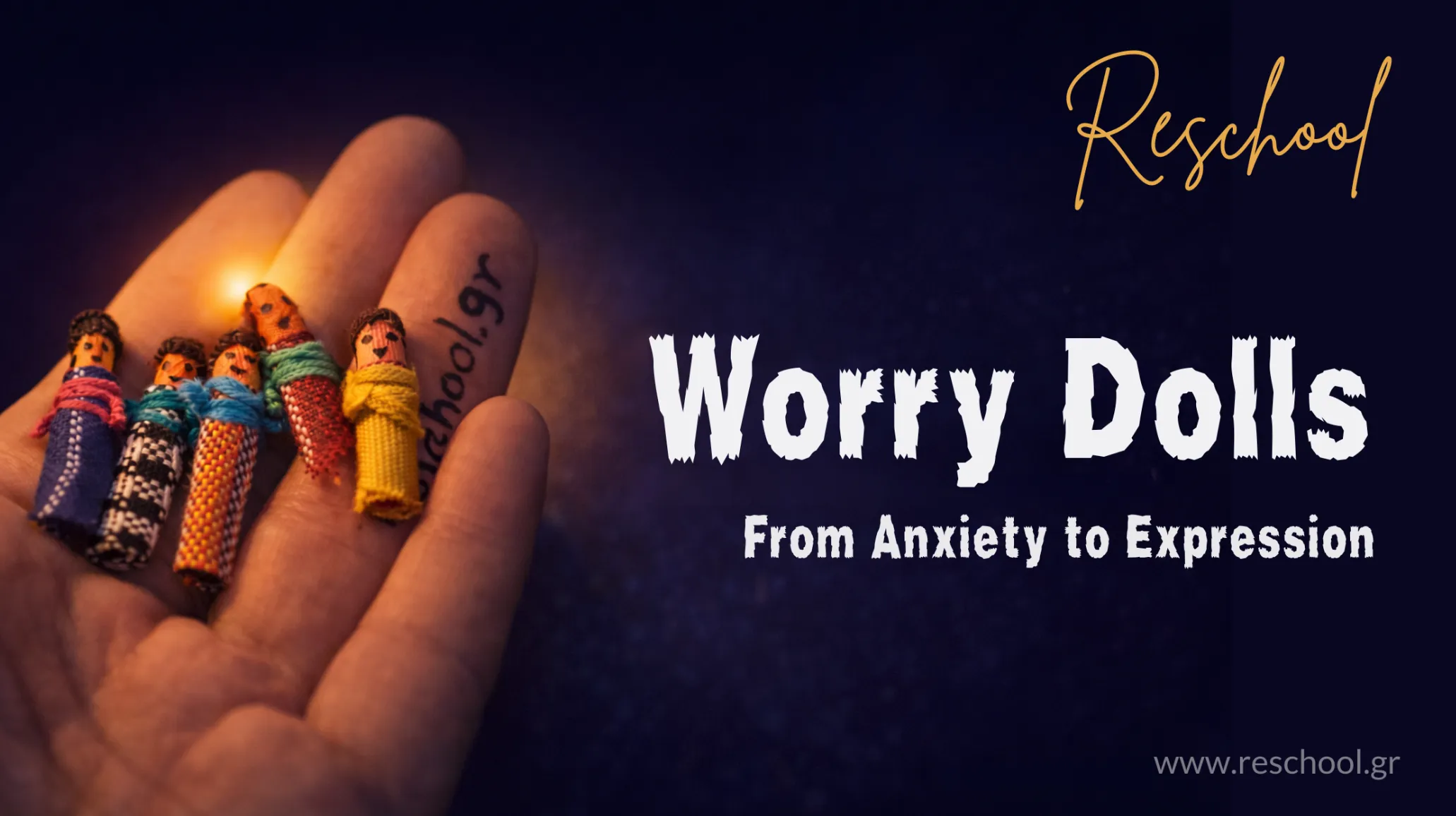
In a small village in Guatemala, children, just before going to sleep, whisper their thoughts and worries to a tiny doll.
It’s as if they are asking it to hold everything that felt heavy during the day.
As if they are saying:
“Keep these for me until tomorrow… because now I need to rest.”
They don’t solve their problems.
But they don’t carry them all night either.
And that… changes everything.
Why are there 6 dolls in each box?
This is not random.
Children are not meant to hold endless worries.
So they are given six dolls — and through this, they learn to:
- sort
- choose
- set limits
They begin to think:
“Out of everything that weighs on me… what really matters most?”
And this process alone is regulation.
When is it used — and what should we be careful about?
Traditionally, this ritual happens just before sleep.
But in a very specific way:
- briefly
- without analysis
- without discussion
- as a ritual
👉 The goal is not to open the worry.
👉 The goal is to leave it.
But if we use it during the day, something different happens:
✔ During the day:
The child:
- expresses
- externalizes
- organizes thoughts
- releases tension
👉 This is processing.
✔ Before sleep:
The child:
- does not analyze
- does not process deeply
- does not revisit everything
👉 The child closes the day.
So:
👉 During the day: I let it out
👉 At night: I let it go
How small is the doll and how is it made?
The doll is tiny — just 2–5 cm.
It fits right into the palm of a child’s hand.
Materials:
- pipe cleaner
- thread or yarn
- a small bead
Simple steps:
- create a small “skeleton” with the pipe cleaner
- add the head (bead)
- wrap it with yarn or fabric for the body and clothes
👉 In just a few minutes, it’s ready.
Can it become a learning tool?
Yes.
And this is where its real power lies.
Not as a toy.
Not just as a calming activity.
But as a bridge between thinking and expression.
Below are a few ideas — not as strict instructions, but as inspiration.
Because every child… every classroom… is different.
1. “Teach the doll”
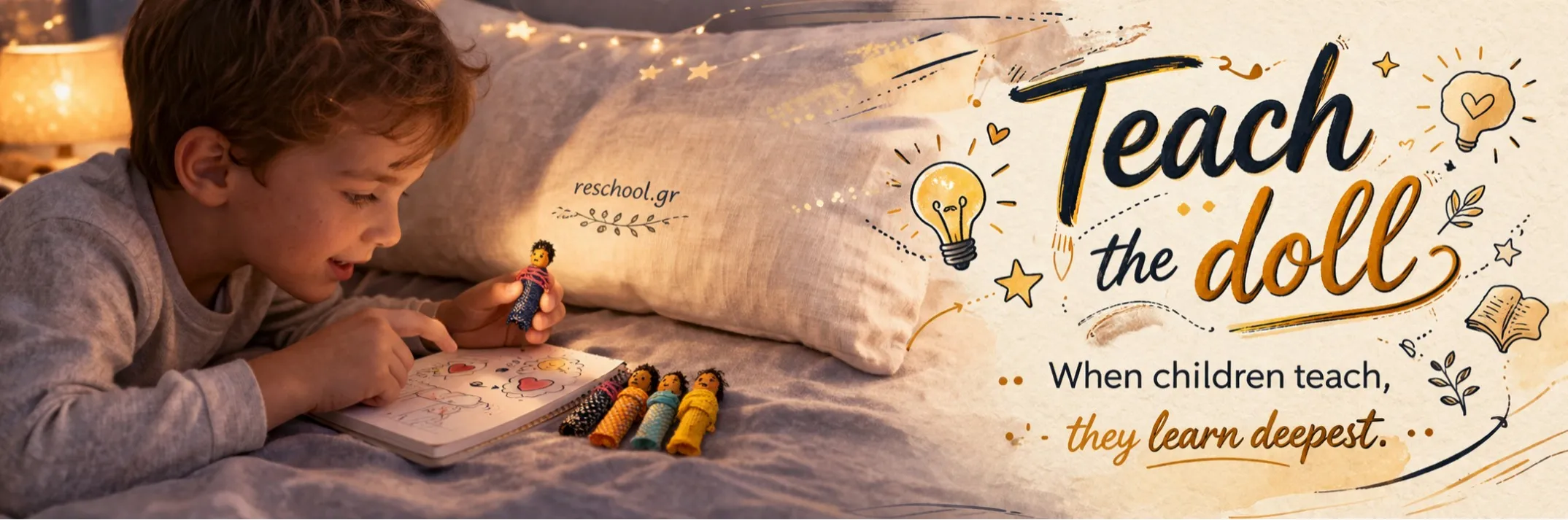
The student explains to the doll what they learned.
At the end of the lesson, each child can take out their doll and share:
- what they learned
- what surprised them
The child is not “reciting the lesson.”
👉 They are sharing it
👉 Giving it somewhere
👉 Making it their own
And that’s the moment when knowledge stops being information…
and becomes experience.
Examples:
👉 “Do you know what I learned today? In French, we use le for masculine and la for feminine… and guess what… THERE IS NO NEUTER! Everything is either a boy or a girl! Isn’t that crazy?”
👉 “Do you know what I learned today? When we say he, she, it — we add -s to the verb! So it’s not ‘he play’… it’s ‘he plays’! Only for them it changes!”
2. “Tell the mistake”
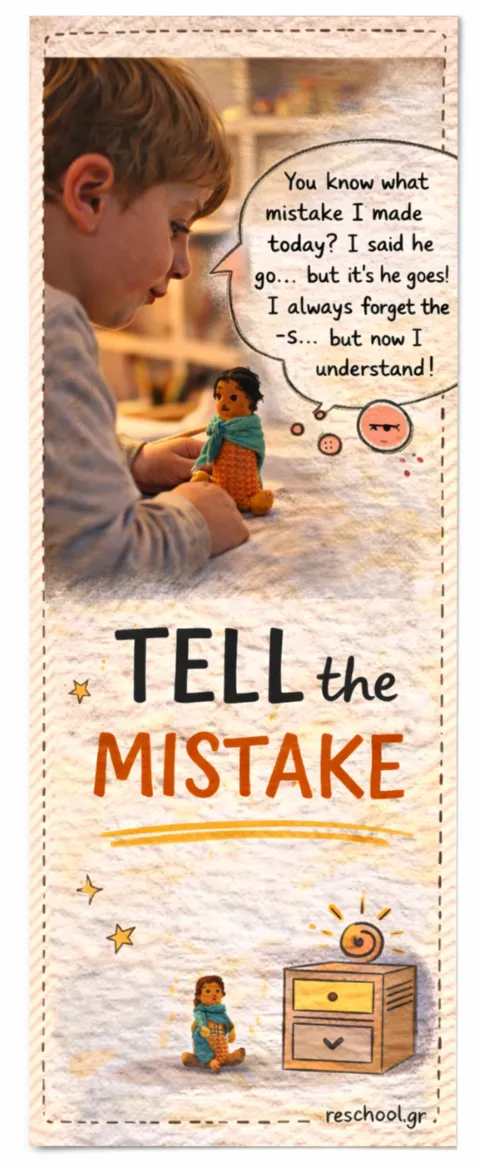
The student tells the doll what they got wrong.
Not to fix it immediately.
But so it doesn’t stay trapped inside.
👉 When the mistake comes out… it becomes smaller.
Example:
👉 “Do you know what mistake I made today? I said ‘he go’… but it’s ‘he goes’! I always forget the -s… but now I noticed it. I wonder… will I remember next time?”
🎯 The child does not hide the mistake.
They don’t fear it.
They acknowledge it.
And that… is power.
3. “Tomorrow’s fear”
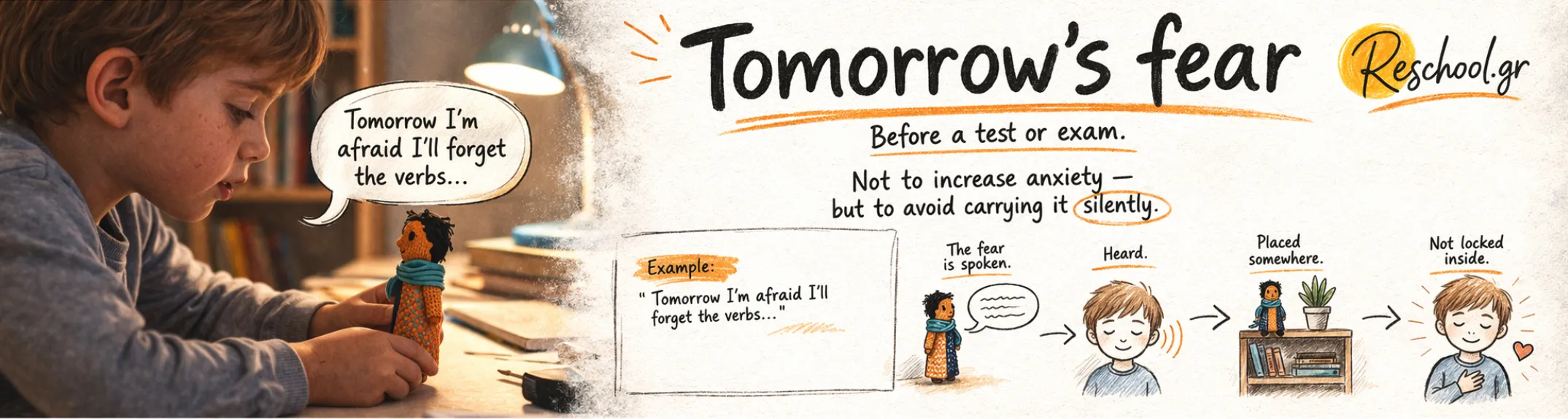
Before a test or exam.
Not to increase anxiety —
but to avoid carrying it silently.
Example:
👉 “Tomorrow I’m afraid I’ll forget the verbs…”
The fear is spoken.
Heard.
Placed somewhere.
Not locked inside.
Why does it work?
Because the child:
- doesn’t carry everything inside
- doesn’t need to solve everything immediately
- learns to transfer, organize… and let go
This is not just an activity.
It is a tool that:
✔ reduces emotional intensity
✔ increases participation
✔ allows children to speak without pressure
It’s not just a doll.
It’s a way for a child to learn:
“I don’t have to hold everything inside me.”
“I can leave this here… and move forward.”
If this idea resonated with you… don’t keep it to yourself.
Try it in your classroom.
Experience that moment when children begin to speak without fear.
And then…
📸 Take a photo
📲 Share it
🏷 Tag us — we would love to see it come to life everywhere
And why stop there?
Send this to another educator.
To someone who feels tired.
To someone searching for something different.
To someone who wants to see children participate, not just attend.
Because sometimes…
a very small idea –
a tiny little doll –
can transform the entire atmosphere of a classroom.
And if it travels from class to class…
something truly beautiful begins.
✨ Warm wishes for Easter, from all of us at Reschool -and from me personally,
Sophia Papadeli
www.reschool.gr