A little while ago, I asked my students to vote on what helps them learn and what they would like more of from their teachers.
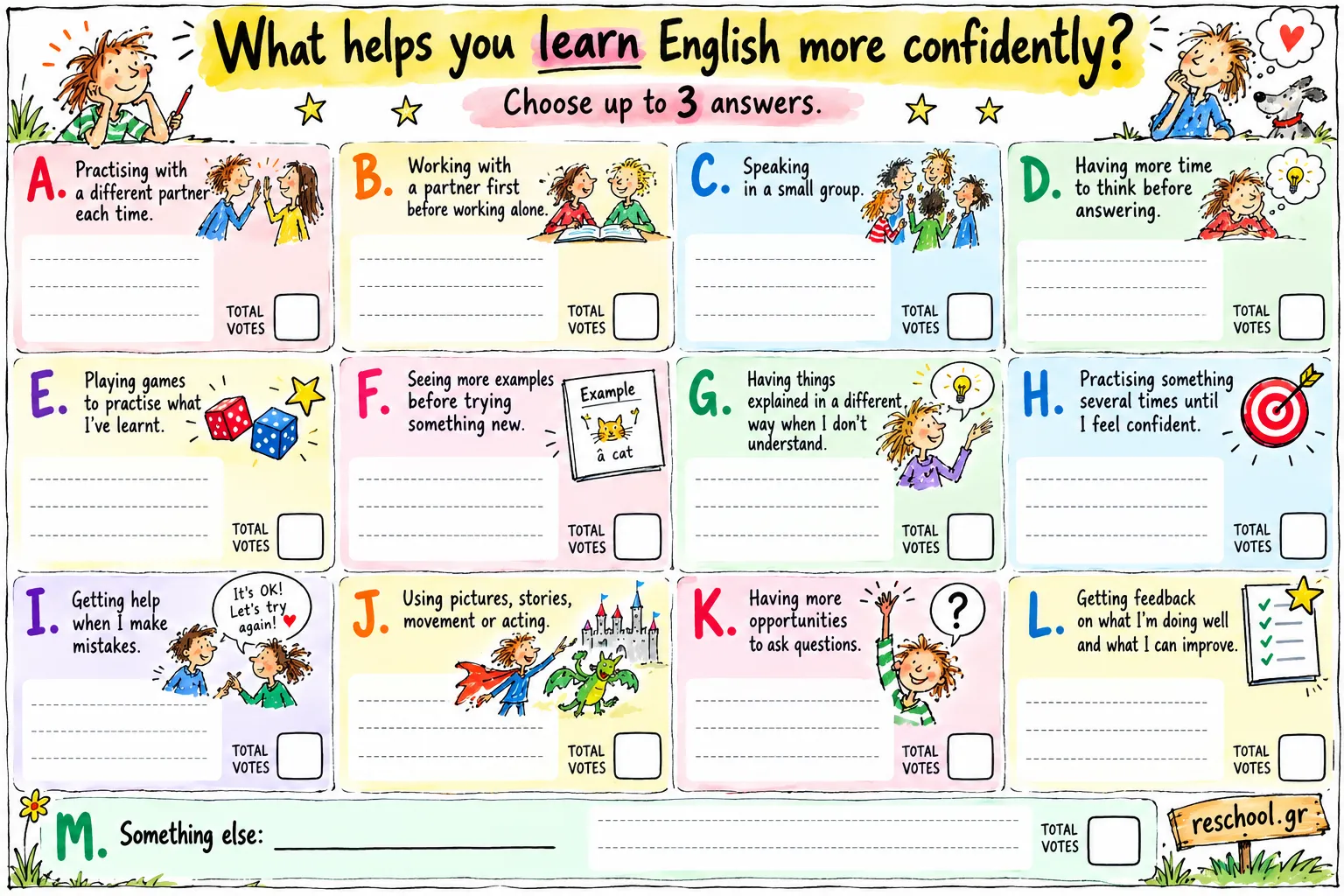
Across all levels, feedback was among their top three choices.
In simple terms, they were asking:
✅ Tell me what I’m doing well.
✅ Show me where I’m struggling.
✅ Help me find a way to do better.
“Good job!” is lovely to hear. But if I don’t know what I did well, how can I do it again?
And “try harder” doesn’t always show me the way forward. I may already be trying very hard. What I need is a different way to approach the difficulty.
That got me thinking:
WHY SHOULD THEY ONLY HEAR IT FROM ME?
Could their classmates also help them notice something they do well? Something that helps another person, perhaps without them even realising it?
That’s how the idea of the little notes began.
“What could we write?”
Before the lesson, I told them:
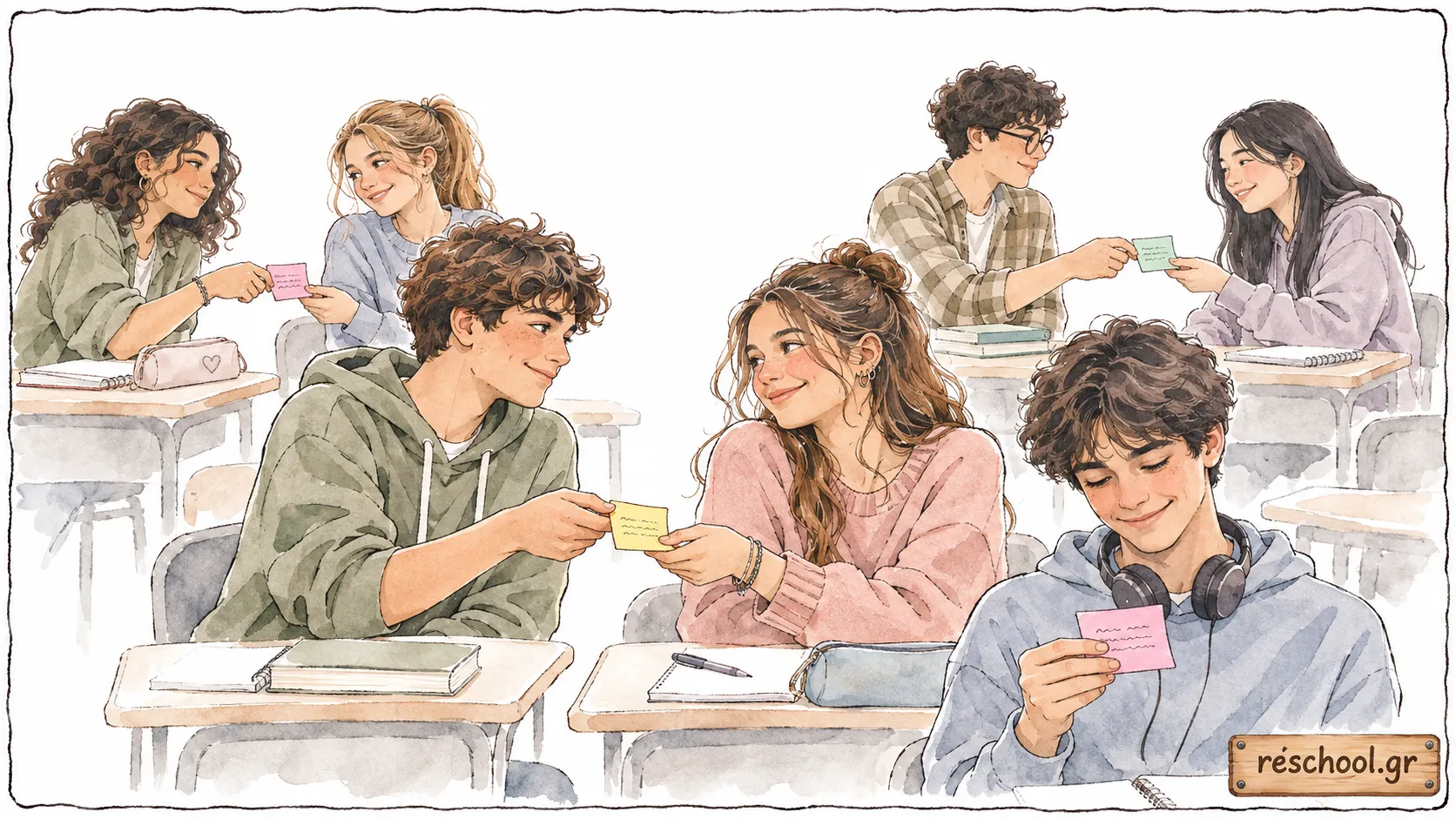
💬 “Today, try to notice one small thing someone does that helps you or makes you feel good. At the end, if you’d like to, write it on a sticky note and give it to them privately.”
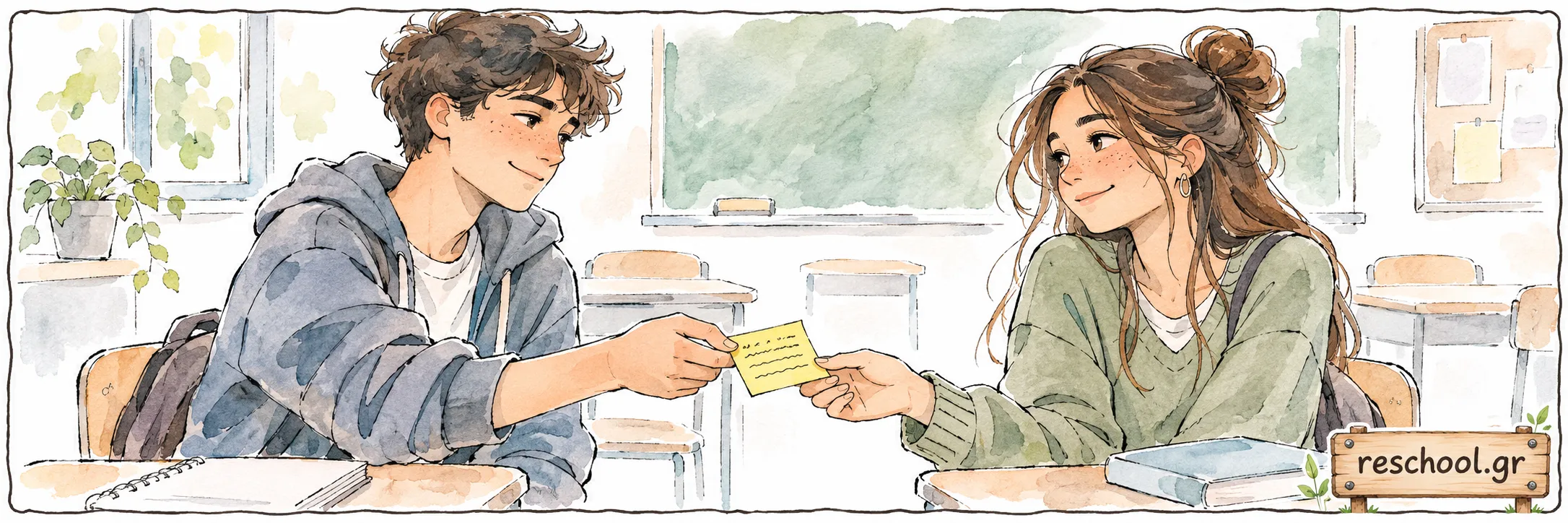
If they needed examples, these were the kinds of things I wanted them to notice:
🧠 “You helped me by giving me time to think before telling me the answer.”
📖 “You helped me by showing me where to look in the text, so I could find the answer myself.”
🙋 “You helped me when you said, ‘Say it just like you said it to me.’ That gave me the courage to put my hand up.”
🎒 “I was happy you waited for me to pack my bag.”
🪑 “I was happy when you said, ‘Come and sit here.’”
Small things. Some seem so ordinary that we never think to mention them.
But to someone who needed a little time, a little company or a little courage, they may have mattered.
Something we may not realise
We may underestimate how good our kind words will make someone feel.
In a series of studies, people giving sincere compliments expected the recipients to feel less positive and more uncomfortable than the recipients actually reported feeling.
Put simply, their words were received more warmly than they expected. The research looked at compliments, rather than this particular classroom activity, but it gives us something useful to think about.
How often do we leave something kind unsaid because we think:
💭 “Oh, they already know.”
But perhaps they don’t.
The student who waited for a classmate may never have realised that it made them feel less alone.
The student who listened patiently may never have known that their patience helped someone keep speaking.
The note makes that small effect visible.
To begin with, just the positives
At first, I considered inviting students to write about things that had made learning harder for them, too.
But I started with positive feedback only. First, I want us to practise noticing and describing a specific action.
For example:
💬 “You’re a good friend.”
That’s lovely to hear. But what exactly did I do?
💬 “I was happy you waited for me when everyone else had already left.”
Now I know. Something I did mattered to you.
Students sign their notes and give them to each other privately. We don’t read them aloud or count who received the most.
And then? Does the note just stay in the school bag?
This is where I want to take the idea further.
In the next lesson, students who received a note can read it again and think:
💭 “Could I do something similar for another classmate?”
Imagine Maria writes to Nick:
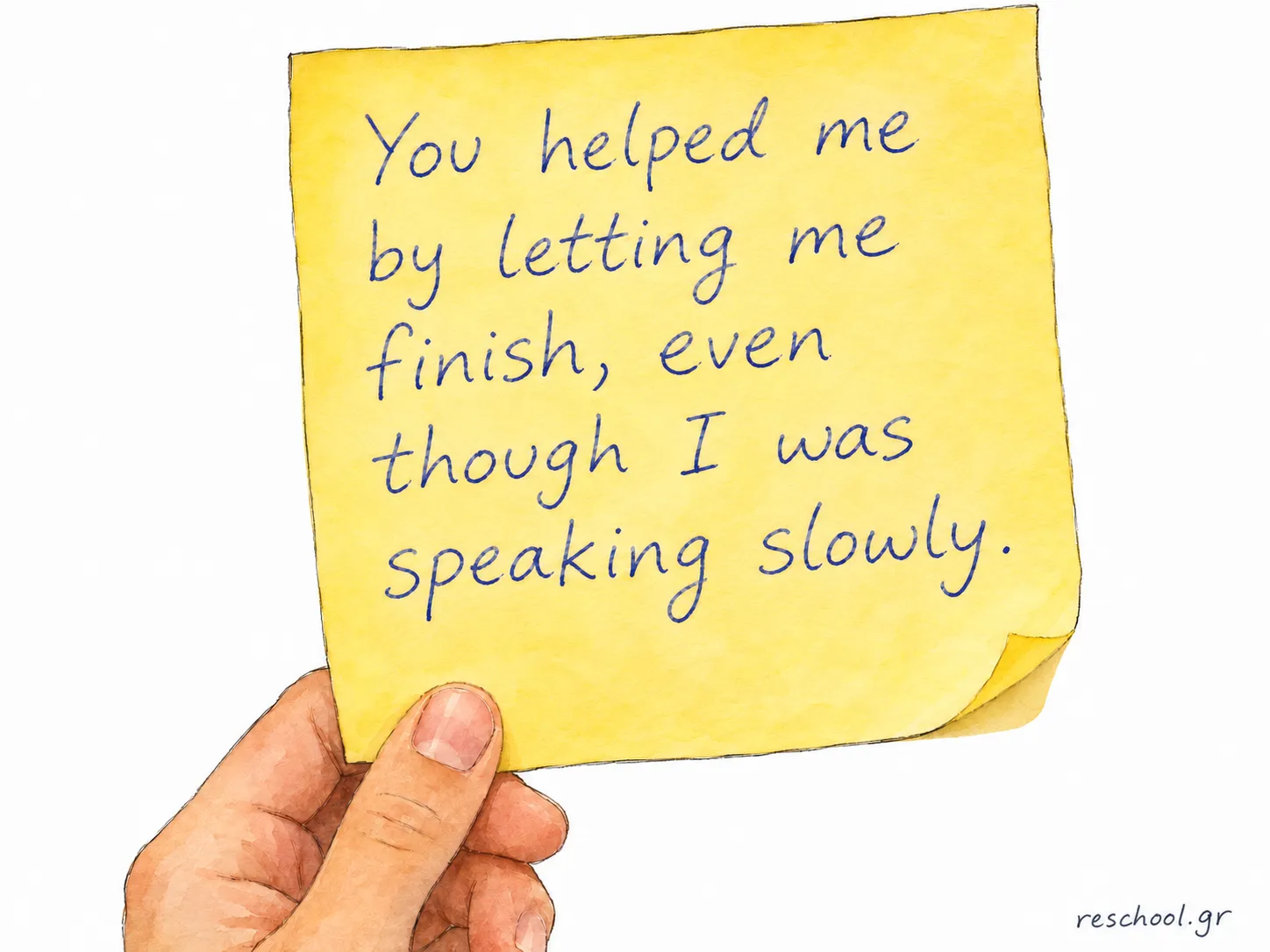
In the next lesson, Nick hears Peter searching for his words. He remembers the note.
He waits.
Perhaps, at the end, Peter writes:
💌 “I was happy you listened until I finished.”
Nick hears again that this action helped someone. And next time, Peter might give another classmate the same time and space.
That’s how I started:
❤️ One action.
💙 One message.
💚 Another chance to do it again.
Of course, we may do something kind and receive no note at all. We don’t need a note every time to keep doing it.
Two minutes that become a habit
Before we leave, we take two minutes to think:
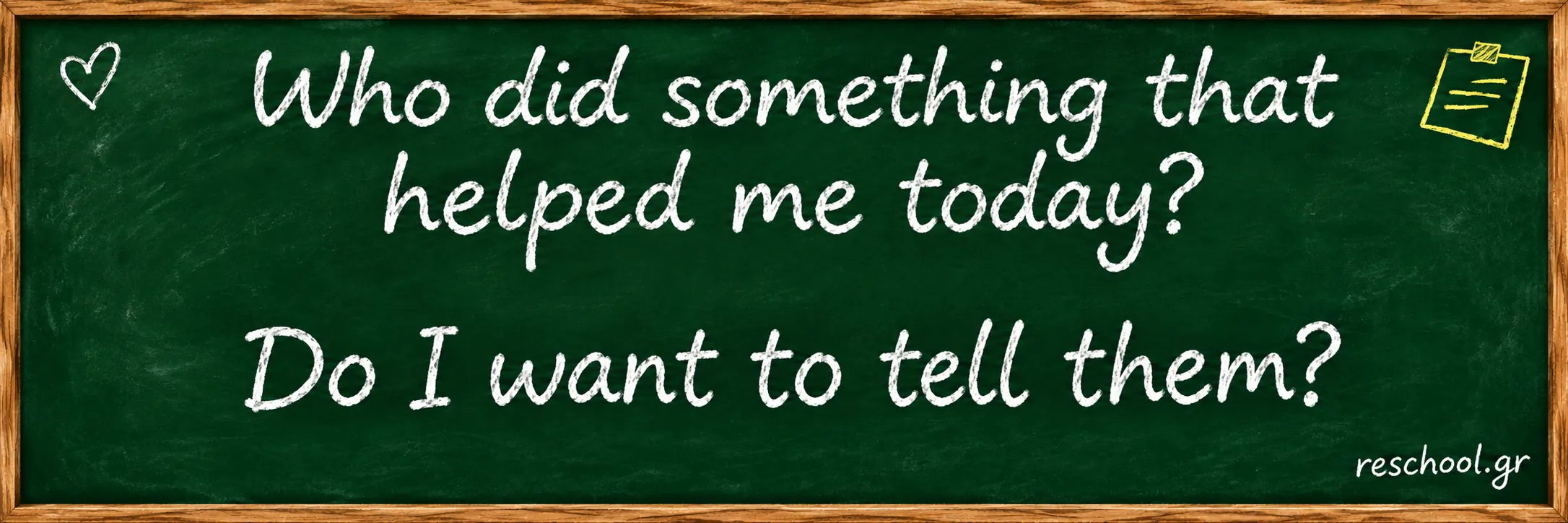
And in the next lesson:
💭 “What have I learned that helps others? How could I do it again, and for whom?”
Students who didn’t receive a note can remember something kind someone did for them and offer something similar to another person.
Everyone can take part in what happens next.
The original vote was about the support students need to learn better. These little notes are one small way to explore how we support each other in the classroom, too.
✔️ To notice a little more.
✔️ To tell others what helped us.
✔️ To discover something about ourselves through someone else’s eyes.
And to make sure something this simple doesn’t go unsaid:
“WHAT YOU DID HELPED ME. I WANTED YOU TO KNOW.”
That was today’s RFL – Reschool Flash Letter.
Perhaps, as you read it, you thought of someone who helped you, someone you never told.
Tell them. They may not know.
And if you’d like to, pass this RFL on to a fellow teacher who might enjoy trying the idea with their own class.