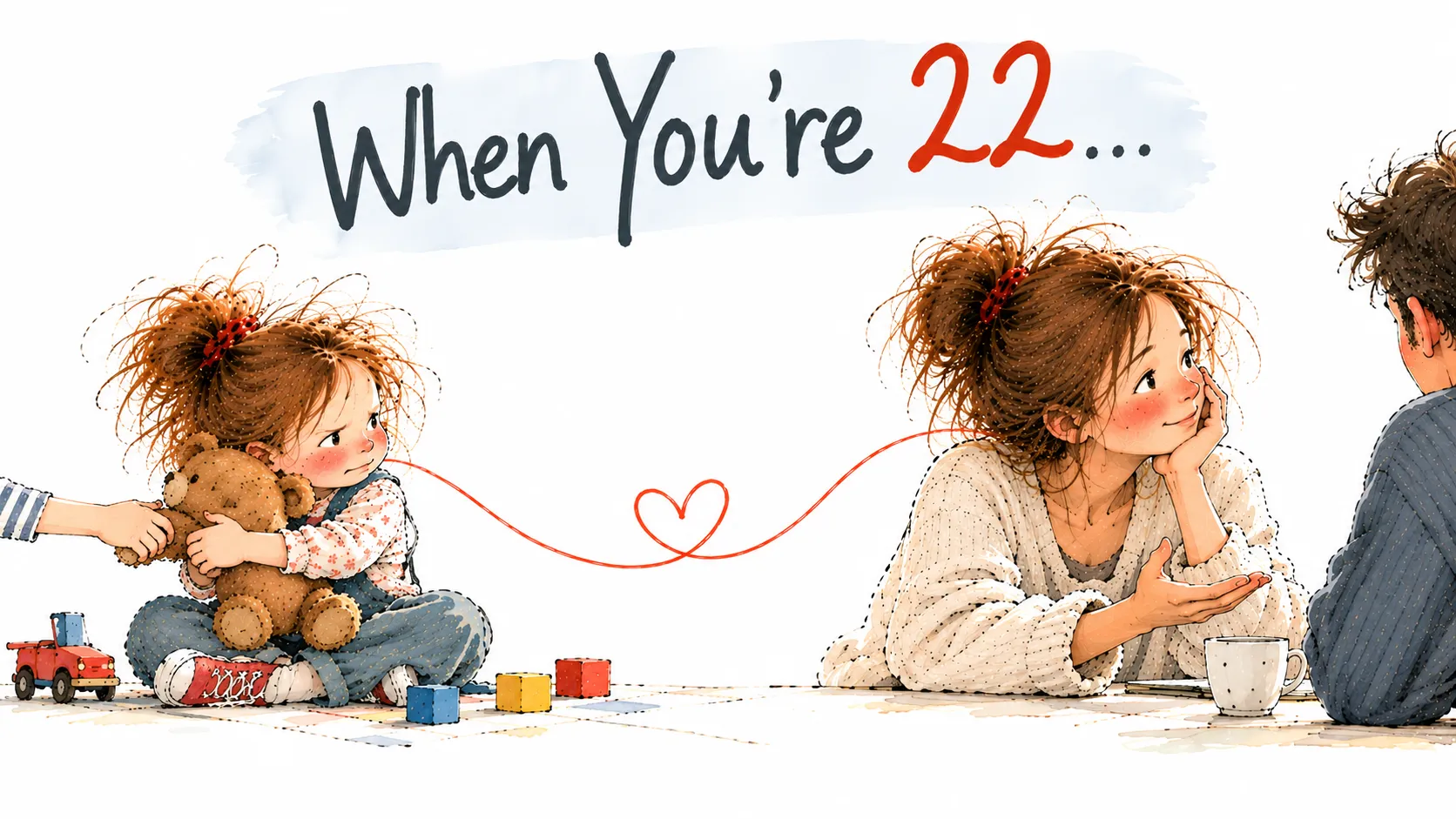
An 18-year scientific study suggests that some of the most important things children learn at school are never tested.
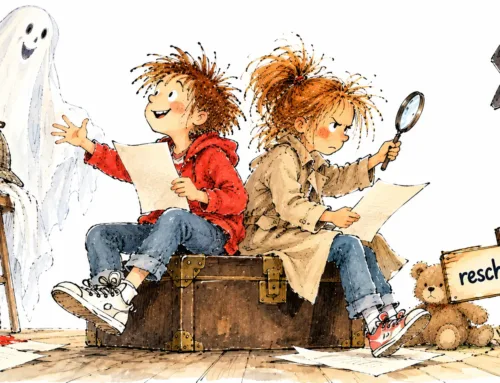
Imagine a four-year-old sitting on the classroom floor, trying to retrieve a toy another child has just snatched away. His face turns red, his fists tighten, and before he can think about what to do, he pushes the other child and bursts into tears. His teacher approaches, facing one of those everyday situations we often want to resolve quickly because there are other children to look after and a lesson to continue.
She could tell him to stop, apologise and share the toy. Or she could sit beside him, help him calm down and teach him to say, “I didn’t like it when you took that. I was playing with it. Can I have it back when you’re finished?” The toy might not return immediately, but the child has gained something far more valuable: a way to stand up for himself without attacking someone else.
Now imagine that same child at 22, sitting opposite someone he loves after an argument. Perhaps he feels hurt, fears being abandoned or wants to walk away. Could those small experiences in preschool, repeated hundreds of times, have influenced how he handles this moment?
It might sound like a stretch to connect a disagreement over a toy with adult relationships. Yet a remarkable study published in 2026 gives us good reason to explore that possibility.
Almost two decades ago, researchers at Penn State began studying 356 children attending Head Start preschools in the United States, a programme serving primarily low-income families. The children were approximately four and a half years old, and the researchers wanted to discover whether teaching language alongside social and emotional skills could make a difference long after preschool ended.
Classrooms were randomly assigned to two groups. One continued with its usual curriculum, while the other received an enhanced programme called REDI (Research-based, Developmentally Informed).
REDI did not simply teach children to recognise happy or sad faces. It helped them understand why people experience different emotions, express their needs, build friendships and resolve disagreements without turning them into fights.
What makes this especially interesting is that learning did not stop when the planned activities ended. Teachers received training and support to use everyday classroom situations as opportunities for learning, whether two children wanted the same toy or someone struggled to wait their turn.
Children were not merely learning about respect when everything was going well. They were practising it precisely when being respectful was difficult.
Then the children grew up. They changed schools, made friends, experienced disappointments and eventually reached the age of 21 or 22, when researchers asked them questions not about their academic achievements, but about their lives.
Young adults who had participated in REDI reported significantly better outcomes on seven of the eleven measures of well-being examined by the researchers.
They reported less loneliness, fewer depressive symptoms and fewer behavioural difficulties, alongside greater empathy, stronger emotional support from others, more days of healthy everyday functioning and greater satisfaction with life.
I want to pause at one word: loneliness.
Loneliness does not necessarily mean having nobody around you. It means feeling that your relationships do not provide the connection you need, something that can happen even when you are surrounded by people.
The possibility that a preschool programme could influence loneliness nearly eighteen years later deserves at least as much attention as the grades we spend so much time discussing.
Of course, not every participant followed the same path, and the remaining four measures did not show statistically significant differences. The research does not suggest that REDI guarantees happiness or protects people from every difficulty in adult life. It does, however, provide evidence that well-designed early education can have effects that remain detectable many years later.
And it makes me wonder how strangely we sometimes measure our work as teachers. We assess what children can demonstrate in a test on Friday, while some of the most important things we teach may only become visible decades later, in moments we will never witness.
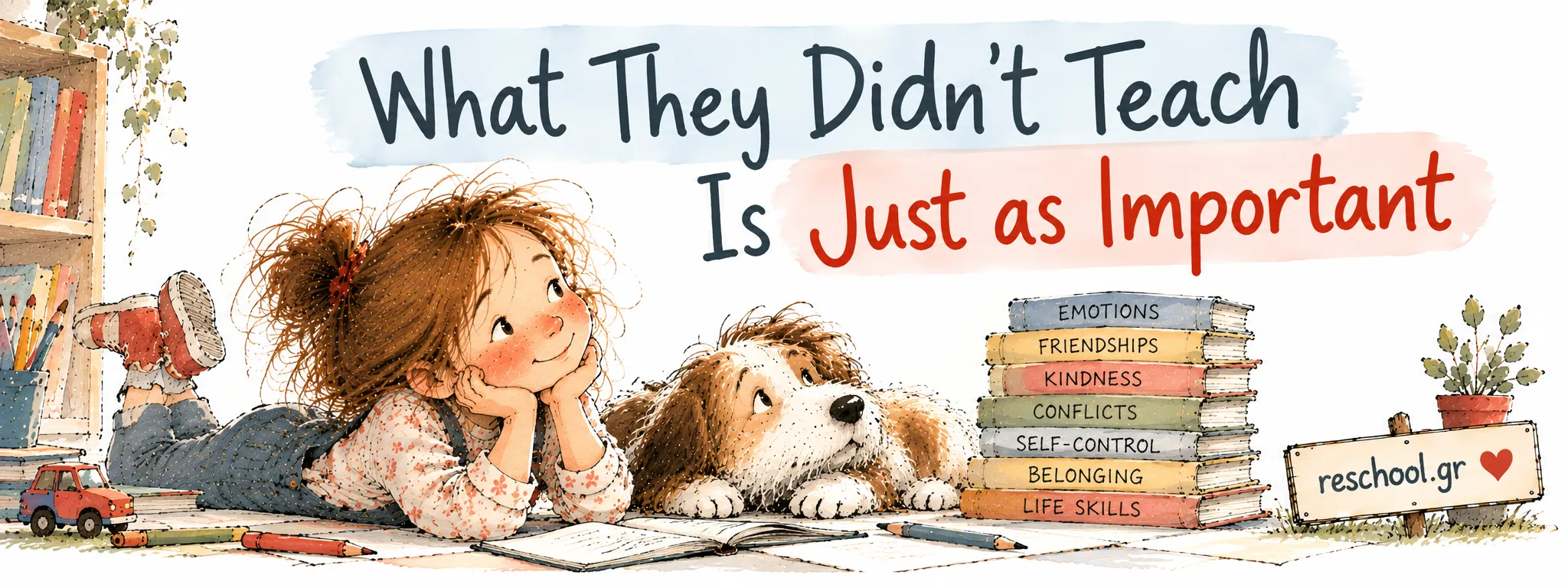
You might imagine that children who later reported greater life satisfaction had been taught to think positively, smile more or repeat cheerful affirmations. But REDI was not about eliminating uncomfortable emotions or teaching children that they should always be happy.
It was about helping them understand their feelings and respond to them more effectively.
A child does not need to stop feeling angry to learn how to manage anger, nor must sadness disappear before a child can cope with rejection. Feelings are real, but our responses to them can be learned and changed.
Consider a child who shouts because a classmate refuses to play with him. Telling him to stop may end the shouting, but it does not necessarily teach him what to do the next time he feels excluded. Helping him understand that someone might simply want to play alone, and showing him how to ask whether they could play together later, gives him a skill he can use again.
This distinction is fundamental. In one case, we are trying to stop an unwanted behaviour; in the other, we are teaching an alternative.
Whenever a child challenges us, perhaps we should ask ourselves: Am I teaching this child what to do, or am I constantly telling them what not to do?
One particularly fascinating feature of REDI, especially for language teachers, is that it combined social-emotional learning with language development. Language was treated not only as a means of communication, but also as a tool for thinking and interacting with others.
Imagine two children who feel equally disappointed because their friends have started a game without them. One becomes angry, accuses the others of not liking him or walks away without speaking. The other manages to explain that he felt hurt because he thought they had forgotten him.
The second child is not necessarily less upset. He simply has more words available to help others understand his experience.
And this is something we sometimes underestimate when teaching English.
“Can I join you?” is not merely a question using can, just as “I didn’t mean to hurt you” is not simply an example of the Past Simple. These are phrases that people use in real relationships, and their value increases when children practise saying them, hearing the response and discovering how a conversation changes depending on how they speak.
Knowing the right words does not automatically mean being able to use them when frightened or angry. Nevertheless, when we connect language practice with meaningful social situations, we allow children to rehearse both the words and the circumstances in which they might need them.
One of the most moving findings concerned children who had experienced greater adversity early in life, including family instability and other difficult circumstances. In two areas, empathy and sociability, the benefits of the intervention were greater among young adults who had experienced more early adversity.
This does not mean that schools can erase childhood trauma or that teachers should take on the responsibilities of mental-health professionals. It does suggest, however, that supportive educational experiences can play a protective role, particularly for children who may have had fewer opportunities to develop certain skills elsewhere.
Whenever I read findings like these, I think of the child nobody wants in their group because he gets angry too easily, the one who constantly interrupts or the one who interprets every comment as an insult.
It is easy to describe such children as difficult. It is much harder to ask which skills they may not yet have developed and how we might help them practise those skills.
We do not know everything a child has experienced before entering our classroom, and we should never assume that we do. But we can create an environment where the children who struggle most are not repeatedly excluded from the very experiences of cooperation that might help them.
Discipline Is Not Just About Stopping Behaviour
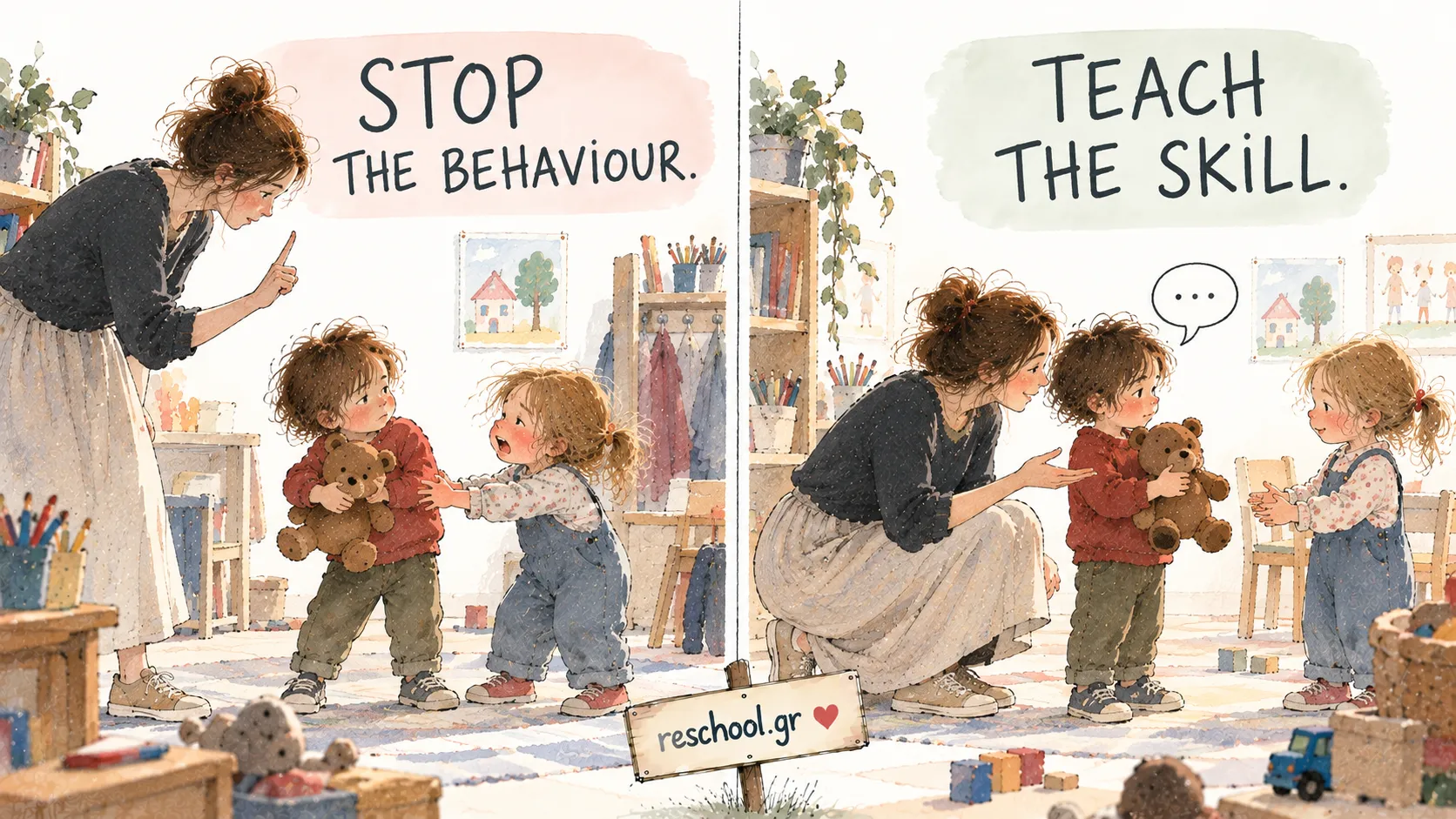
Suppose a child repeatedly interrupts a classmate. Saying “Stop interrupting” establishes a boundary, but it does not necessarily teach the child how to remember an idea while waiting or how to contribute without taking away someone else’s opportunity to speak.
Instead, we might show the child how to make a quick note, raise a hand or wait and then say, “I’d like to add something.”
The boundary remains exactly the same, but we have turned a correction into a learning opportunity.
We would never expect a child to spell an English word correctly without teaching it first, yet we often assume children should already know how to wait, disagree respectfully, cope with losing, apologise or accept that someone does not want to play with them.
Social behaviour involves skills that develop through modelling, guidance, practice and repetition. Not every difficulty can be solved through conversation, but classroom discipline becomes more meaningful when boundaries are accompanied by teaching.
What Can We Do in Class Tomorrow?
I would hate for us to read this research, feel inspired and then return to exactly the same routines the following morning. So here is a simple English-language activity that takes about ten minutes and combines speaking practice, perspective-taking and social skills.
RESCHOOL CLASSROOM MOVE: THE SECOND CHANCE
Invite two students to perform this short dialogue without giving them any background information.
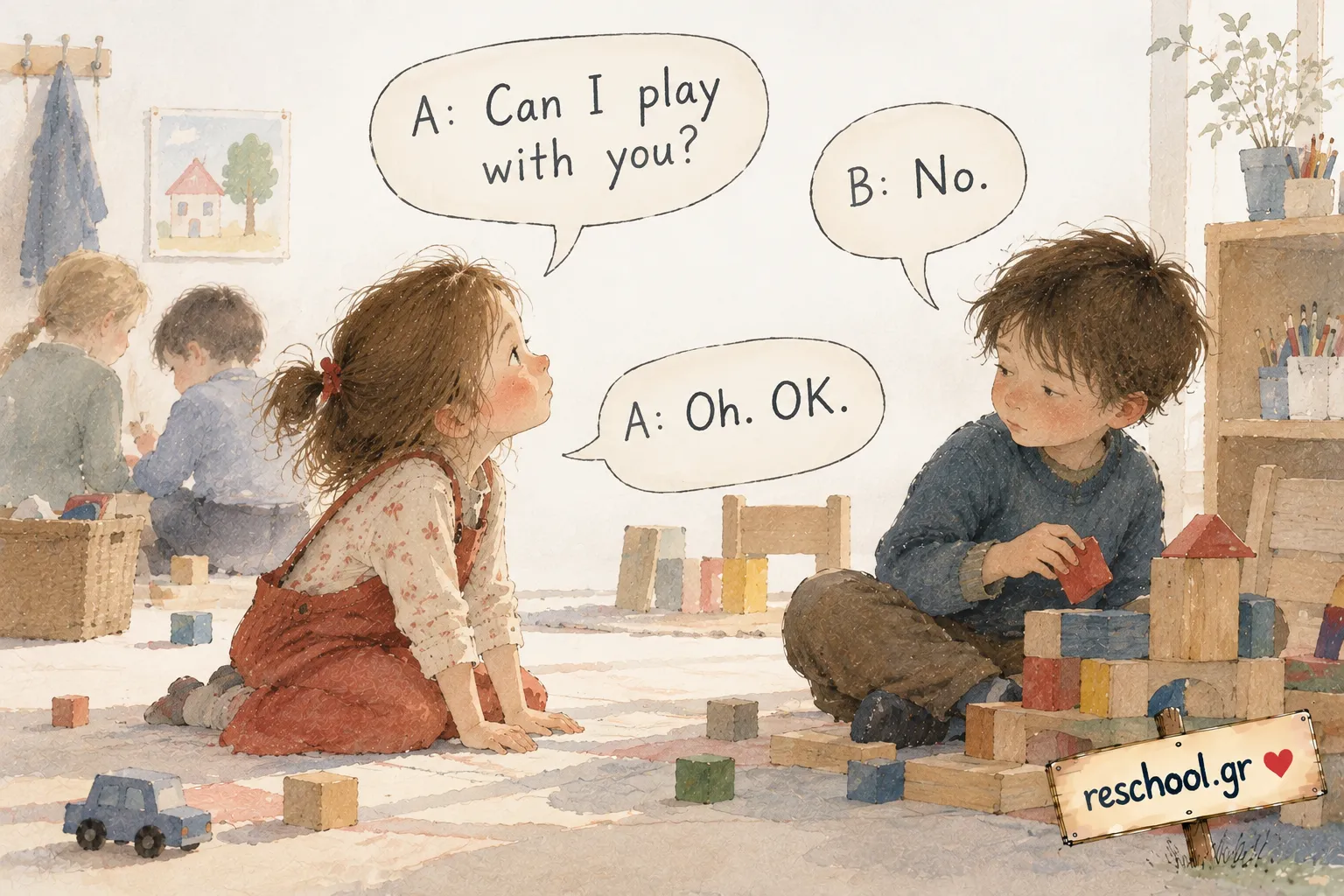
A: Can I play with you?
B: No.
A: Oh. OK.
Ask the class how A might feel and why B refused. Some children may think B is rude, others may assume B dislikes A, while a few might suggest that B simply wants to play alone. Encourage different interpretations rather than searching for one correct answer, because this is an opportunity to show children how quickly we form conclusions when we know only part of a story.
Then reveal a missing detail: B is already playing a game that has started and cannot accept another player until the next round.
Suddenly, the refusal means something different. The children discover that “No” does not always mean “I don’t like you.” Sometimes it simply means “Not right now.”
Give B a second chance to respond without changing the decision.
B: Not right now. You can play in the next round.
A: OK. I’ll wait.
Ask the class what changed. B has maintained exactly the same boundary, but A now understands the reason behind the refusal.
This is important because we are not teaching children that they must always include everyone in every activity or that they are never allowed to say no. We are teaching them that they can protect their boundaries without unnecessarily hurting others, and that hearing no does not always mean being rejected.
Later in the week, when a real disagreement arises, we can return to the activity with one simple question:
“Would you like a second chance to say that?”
Not as a punishment, and certainly not as a demand that an upset child immediately become polite. Instead, we offer time, support and another opportunity to express a need in a way the other person can understand.
This ten-minute activity is my own classroom adaptation of principles highlighted by the research, not the REDI intervention itself. We cannot expect a single activity to produce the outcomes of a comprehensive educational programme, but it is a practical way to begin teaching social and emotional skills through everyday classroom interactions.
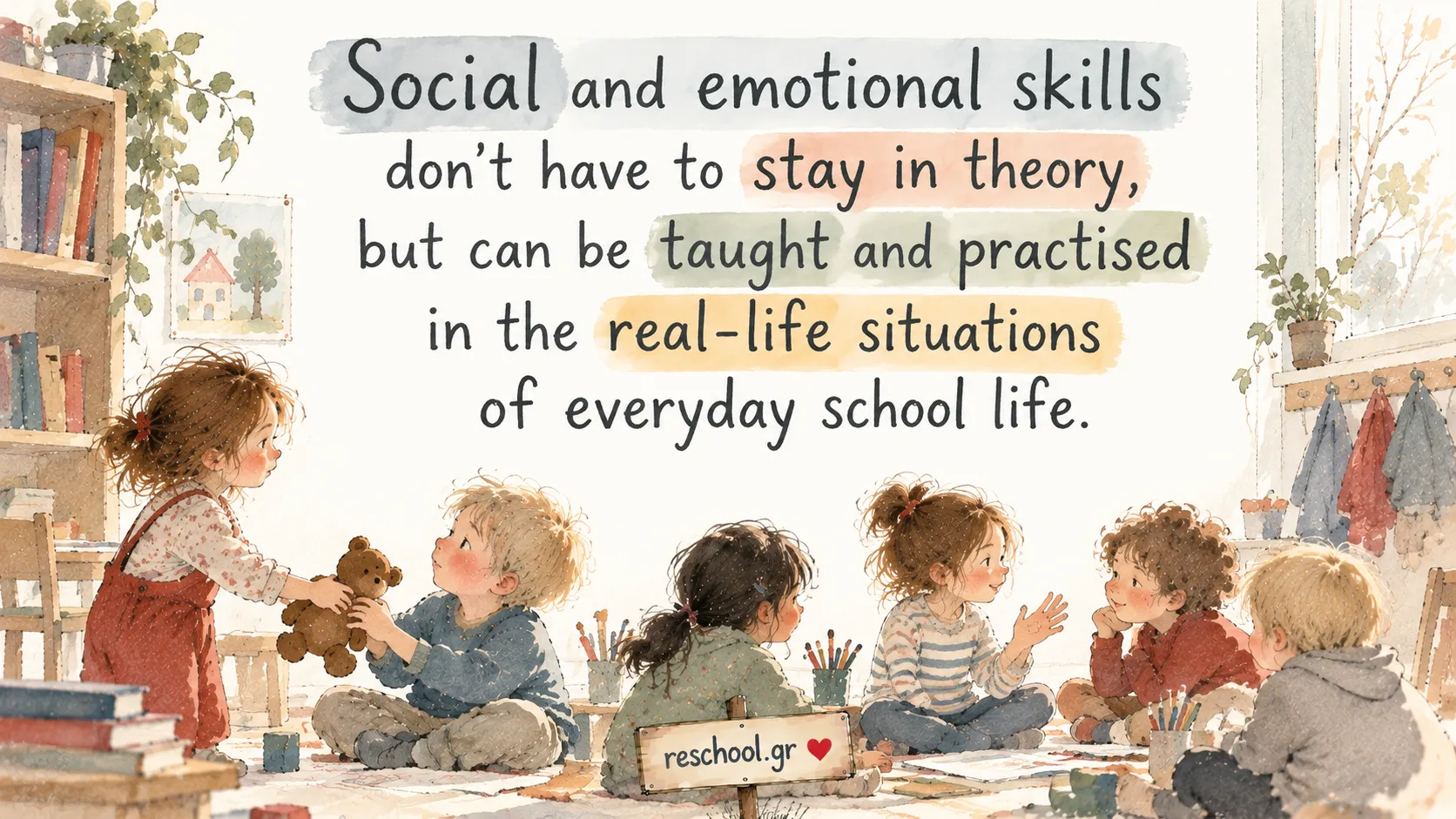
What Does the Research Really Tell Us?
We should be careful not to overstate the findings. REDI was a comprehensive programme involving several educational practices, teacher training and ongoing support, so we cannot identify which individual component contributed most to the long-term outcomes.
The young adults’ well-being was assessed through self-reports, not every original participant took part in the follow-up, and the findings concern children from particular communities and socioeconomic circumstances in the United States.
Nevertheless, the original randomised design and the exceptionally long follow-up make the study significant. It does not allow us to predict which children will be happy as adults, but it provides evidence that systematically developing social, emotional and language skills in early childhood can have consequences extending far beyond school.
Perhaps we should stop treating social-emotional learning as something extra to squeeze in if we finish the syllabus early. The ability to communicate, cooperate and manage relationships is not separate from a child’s development. It is part of it.
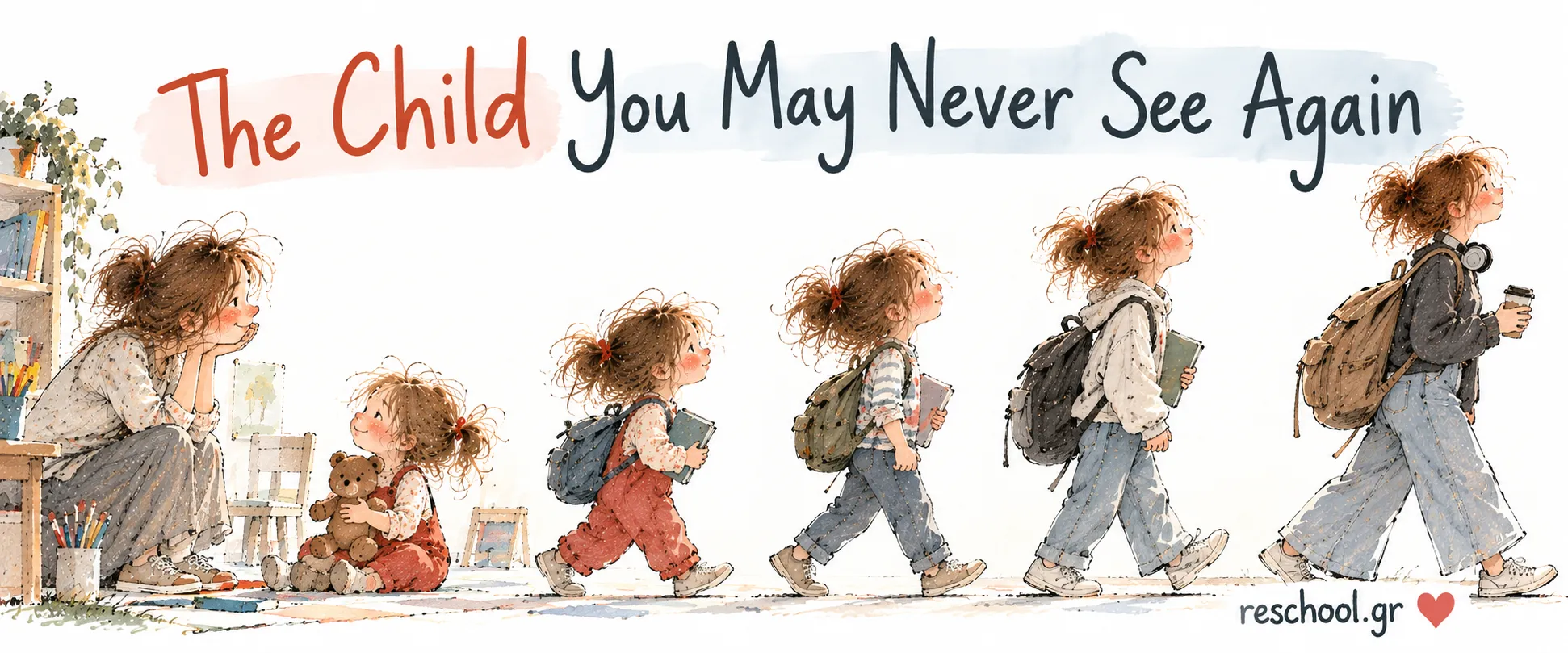
One day, you will teach a child for the very last time, and you probably will not realise it. They will pack their books, put on their backpack, wave goodbye and walk out of the classroom, while you continue thinking about unfinished exercises, marking and the next group waiting outside.
Years will pass, and that child will meet people they love, be hurt by some, disappoint others and face situations for which no textbook has prepared them. They will need to apologise without knowing whether they will be forgiven, say no without wanting to hurt someone, defend themselves without humiliating another person and decide whether a relationship deserves another chance.
Perhaps, in one of those moments, they will use a way of communicating they practised repeatedly when they were young. Perhaps they will pause before reacting or recognise that behind someone’s unpleasant behaviour there may be a person who is struggling.
We will never know which particular experience made the difference, because human beings are shaped by countless relationships, events and choices. But that does not make the possibility that school played a part any less meaningful.
You may never meet that child again, and you may never discover whether something you taught stayed with them into adulthood. You might not even remember the disagreement over a toy that once seemed like just another interruption in a busy school day.
And perhaps that is what moves me most about this research: it reminds us that the impact of teaching does not necessarily end when the lesson does, and that some of its most important results may remain invisible to us.
So I want to leave you with one question.
If, twenty years from now, a child remembers none of the exercises you taught but has kept one way of treating people when life becomes difficult, what would you want them to have learned from you?
Because one day they will stop being your student, but they will never stop being a human being among other human beings.
And perhaps your most important lesson will become useful long after you are no longer there to teach it.
Teach like an artist — Learn like an artist.
reschool.gr
Scientific reference: Bierman et al. (2026). Promoting Resilience With Social-Emotional Learning: Young Adult Follow-up of a Preschool Randomized-Controlled Trial. American Psychologist.
https://doi.org/10.1037/amp0001765